Reading Foundations3 guides
◆ Welding symbols chart and learning libraryWelding Symbols Chart:
Welding Symbols Chart:
Meanings, Diagrams and Examples
Use the 30 annotated guides to identify a symbol, understand where it applies, read nearby dimensions, compare similar callouts, and test the result with six questions.
SYMBOL GUIDE MAP5 topics · 30 guides
Common Weld Types7 guides
Groove Weld Symbols9 guides
Dimensions2 guides
Supplementary Symbols9 guides
Stop guessing from isolated icons. Learn joint → side → type → values → modifiers.
Connect callouts to preparation, fit-up, extent, access, and the questions to raise before work starts.
Use comparison tables, failure checks, and focused questions instead of relying on flash-card recall.
START WITH YOUR REAL QUESTION
Not sure which guide you need?
Choose what is blocking you on the drawing. The library will route you to the smallest useful learning path.
RECOMMENDED PATH
Build the reading grammar first
Learn what each part of the complete welding symbol does before memorizing individual weld shapes.
- Parts of a welding symbol
- Arrow side vs other side
- Fillet weld and dimensions
THE FIVE QUESTIONS BEHIND EVERY CALLOUT
A welding symbol is a decision system—not a vocabulary list.
Use these questions in order. If one answer is missing, the drawing may require another view, detail, note, WPS, or clarification.
Trace the arrow to the exact joint or member.
Learn anatomy →Assign arrow side, other side, or both sides.
Learn side rules →Name the elementary weld or supplementary instruction.
Compare symbols ↓Read size, length, pitch, angle, root opening, and count by position.
Decode dimensions →Check extent, location, contour, finish, tail, notes, detail, and WPS.
Read modifiers →WELDING SYMBOLS CHART
Symbol meanings, diagrams and guides
Open any symbol for its full guide and practice questions, or follow the 5 topics in order and track your progress.
GUIDES MARKED AS READ0 of 30 guides saved0% marked as read · stored on this device · not a mastery score
Start with Symbol AnatomySymbol Anatomy
Showing 30 of 30 symbol guides
MODULE
0/3Reading Foundations
How a welding symbol points to a joint and assigns information to each side.
SYMBOL 01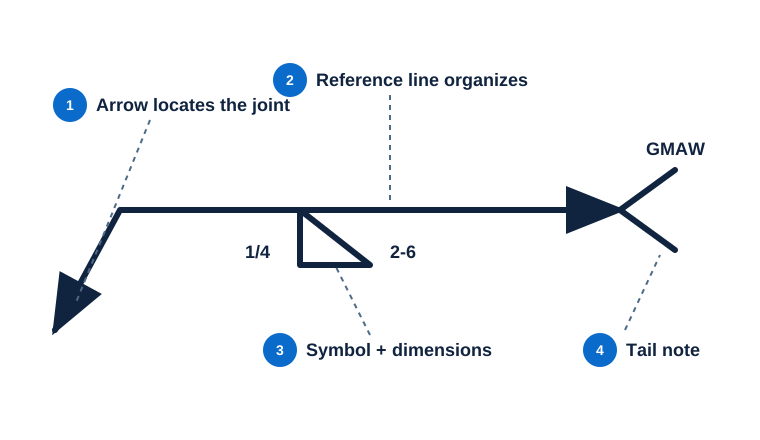
Symbol Anatomy
Trace a callout to the correct joint before naming the weld
KEY CHECKJoint first. Side second. Weld third. Numbers fourth. Modifiers last.
SYMBOL 02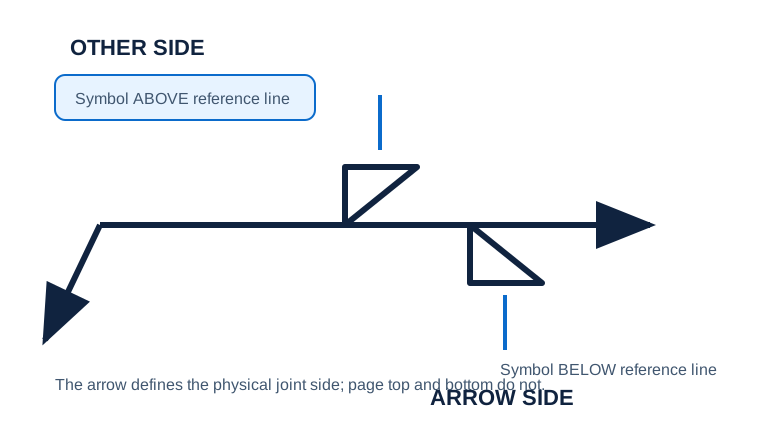
Arrow Side vs Other Side
Identify the physical arrow side even when the view is rotated
KEY CHECKArrow side follows the joint, not the page.
SYMBOL 30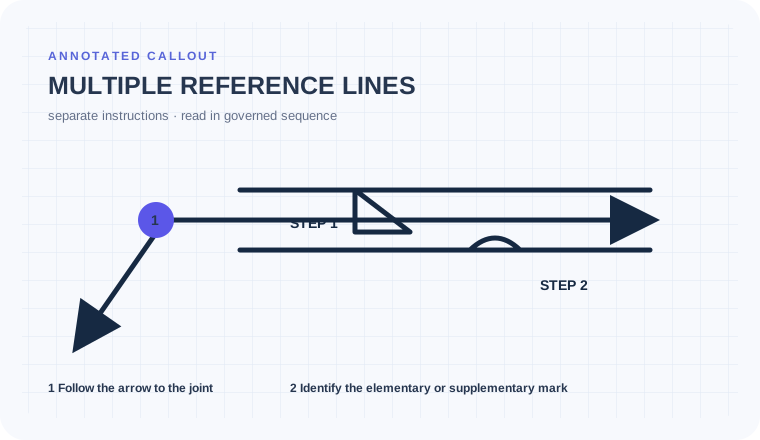
Multiple Reference Lines
Keep operations on separate reference lines
KEY CHECKOne arrow can carry several stages; never let their values cross lines.
MODULE
0/7Common Weld Types
Fillet, plug, slot, spot, seam, and edge weld callouts used on fabrication drawings.
SYMBOL 03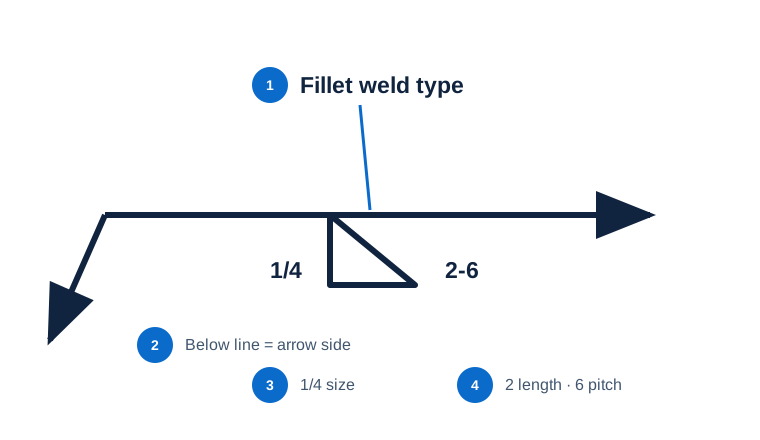
Fillet Weld
Recognize a fillet instruction without assuming its dimensions
KEY CHECKTriangle tells type; left tells size; right tells extent.
SYMBOL 07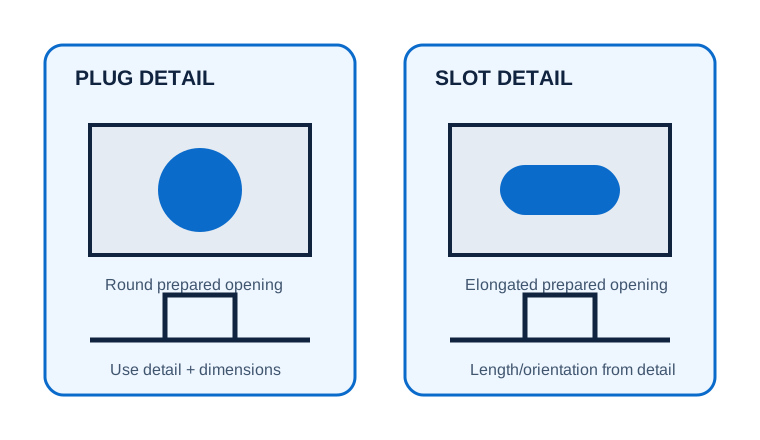
Plug & Slot Welds
Distinguish a plug/slot weld from a spot weld
KEY CHECKPlug and slot mean prepared opening; spot does not.
SYMBOL 08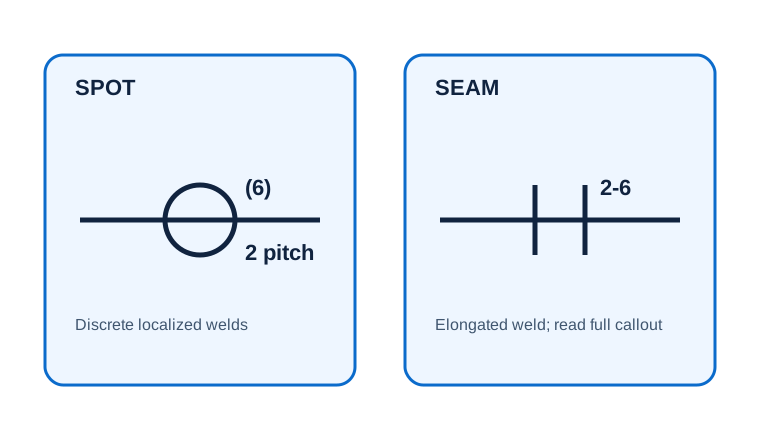
Spot & Seam Welds
Distinguish spot, seam, and plug/slot instructions
KEY CHECKSpot is a location; seam is a path; plug requires an opening.
SYMBOL 17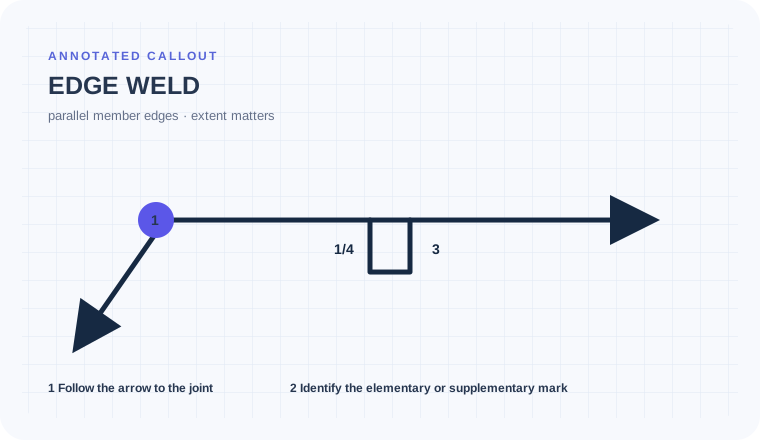
Edge Weld
Recognize an edge-weld instruction on parallel or nearly parallel members
KEY CHECKAn edge weld is defined by member arrangement, not by a line that happens to look like an edge.
SYMBOL 21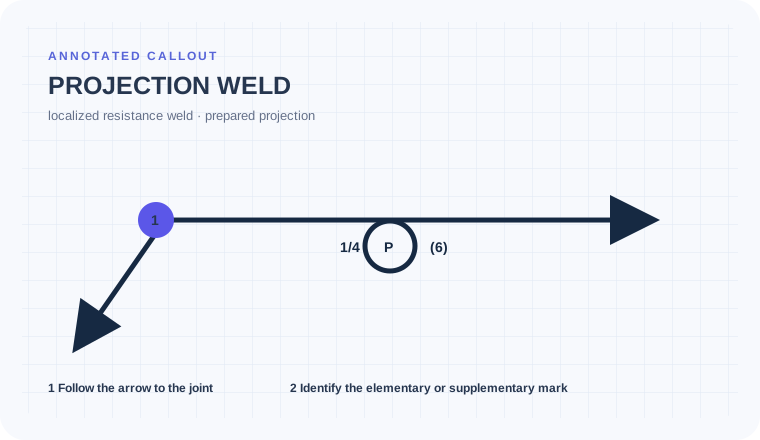
Projection Weld
Identify the formed projection that localizes a resistance weld
KEY CHECKProjection means formed feature; left means size; note or tail carries strength.
SYMBOL 22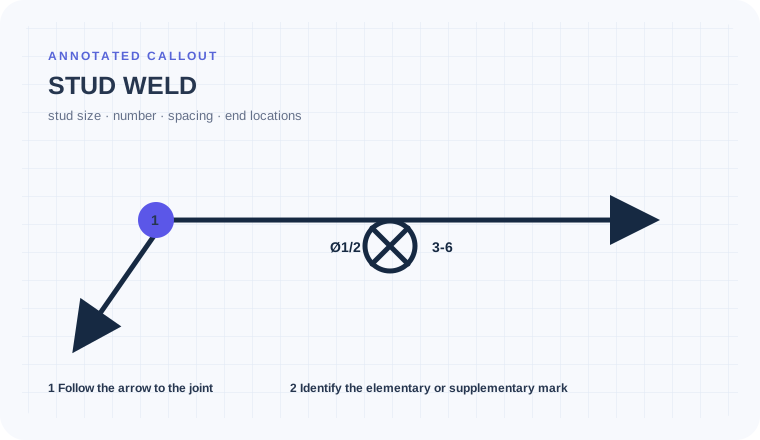
Stud Weld
Identify the face that receives welded studs
KEY CHECKCount repeats the studs; a datum locates the row.
SYMBOL 23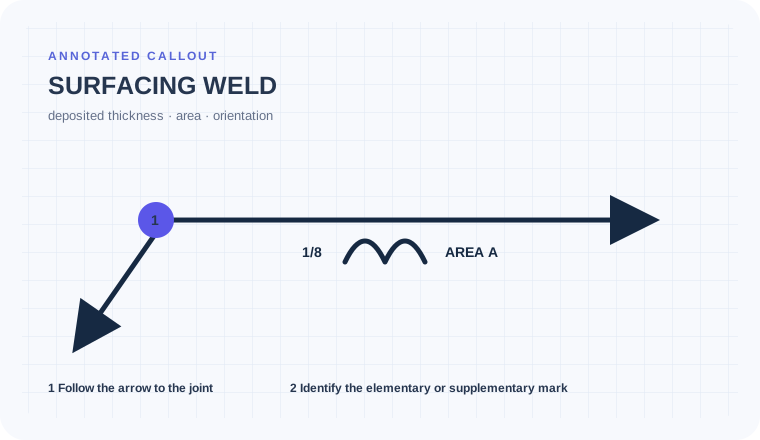
Surfacing Weld
Recognize surfacing as deposited material on an area rather than a joint weld
KEY CHECKSurfacing adds stock to an area; machining decides the final size.
MODULE
0/9Groove Weld Symbols
Square, V, bevel, U, J, and flare groove preparation and dimension rules.
SYMBOL 04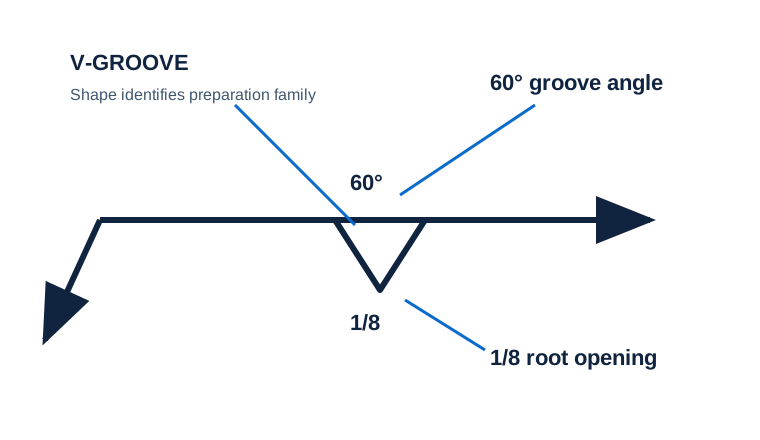
Groove Welds Overview
Classify square, V, bevel, U, J, and flare groove families
KEY CHECKShape names the family; dimensions make it fabricable.
SYMBOL 11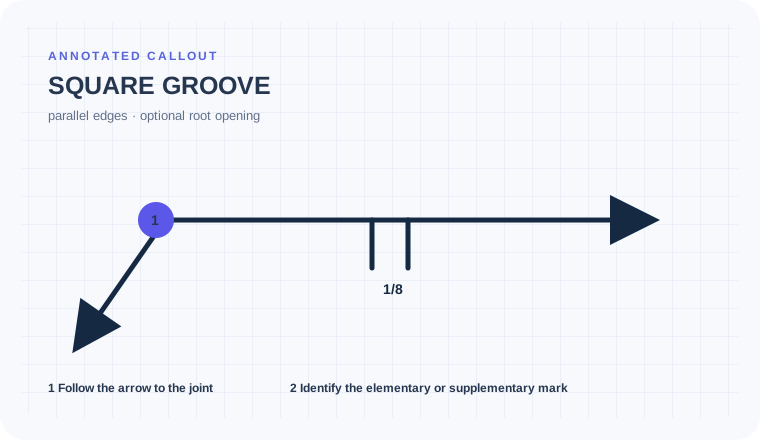
Square Groove
Recognize a square-groove joint without inventing bevel preparation
KEY CHECKSquare edges do not mean zero preparation decisions.
SYMBOL 12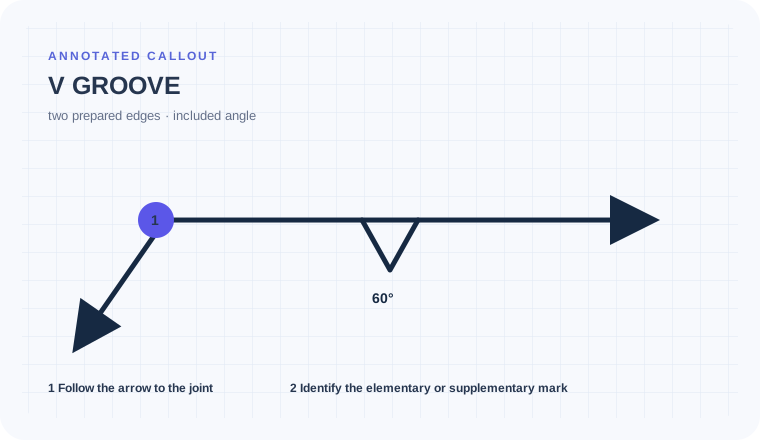
V Groove
Recognize a V-groove preparation
KEY CHECKA V names the joint family; it does not promise equal bevels or full penetration.
SYMBOL 13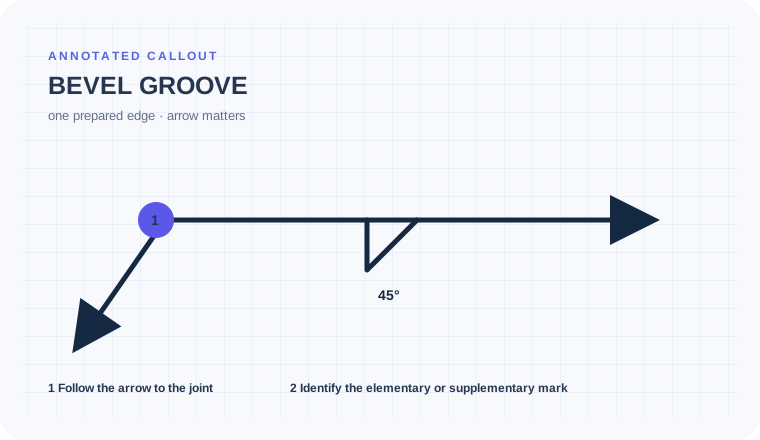
Bevel Groove
Recognize an asymmetric bevel-groove preparation
KEY CHECKBevel is asymmetric: always ask which member gets prepared.
SYMBOL 14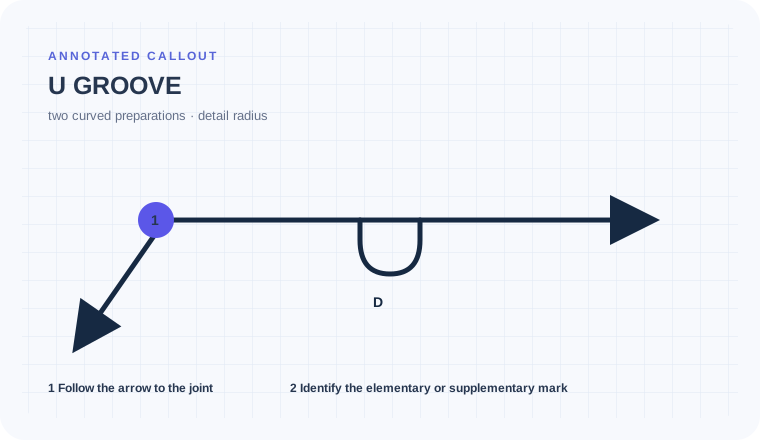
U Groove
Recognize curved preparation on both members
KEY CHECKThe U icon selects a family; the detail supplies the machine geometry.
SYMBOL 15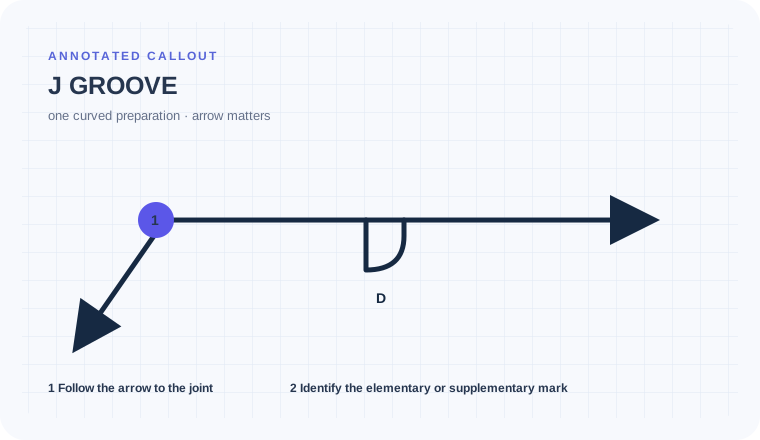
J Groove
Recognize curved preparation on one member
KEY CHECKJ is one curved preparation; U is two.
SYMBOL 16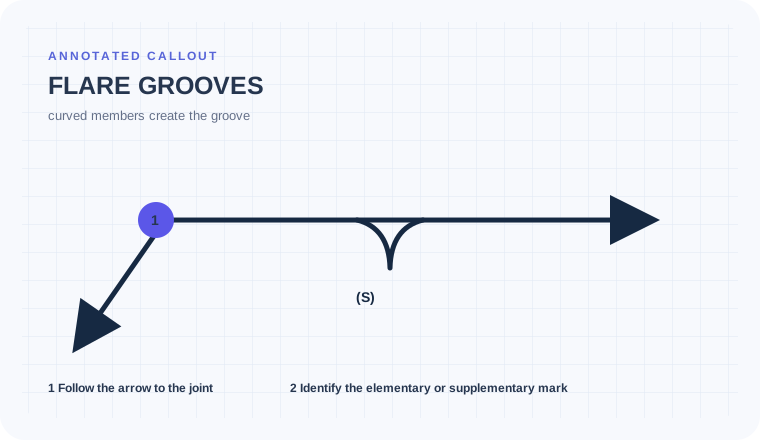
Flare Grooves
Identify flare-V and flare-bevel joint geometry
KEY CHECKFlare comes from member radius, not a grinder-made bevel.
SYMBOL 28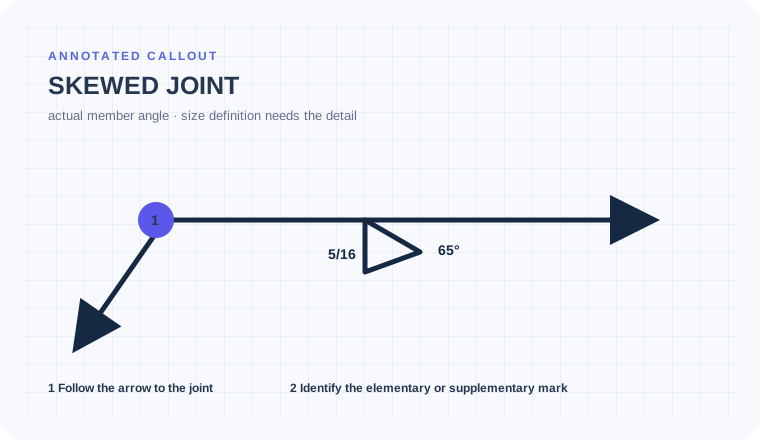
Skewed Joint
Use the actual member angle instead of a ninety-degree assumption
KEY CHECKSkew changes geometry, not the arrow-side rule.
SYMBOL 29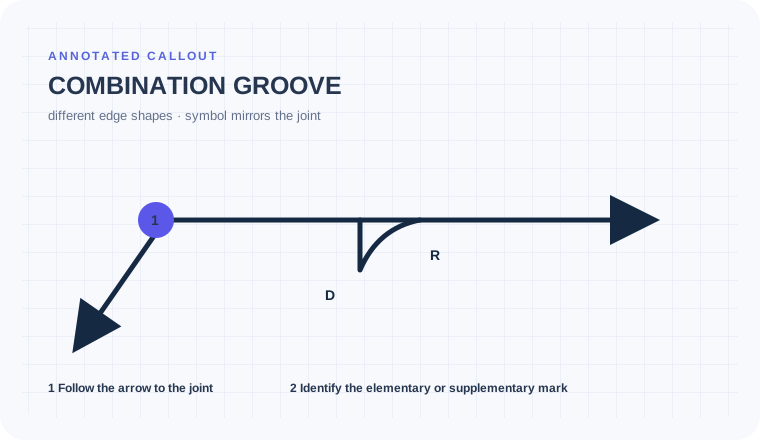
Combination Groove
Match two different edge shapes to their members
KEY CHECKTwo edge shapes, one joint: map each element before reading any number.
MODULE
0/2Dimensions
How size, length, pitch, angle, and root opening are placed and read.
SYMBOL 05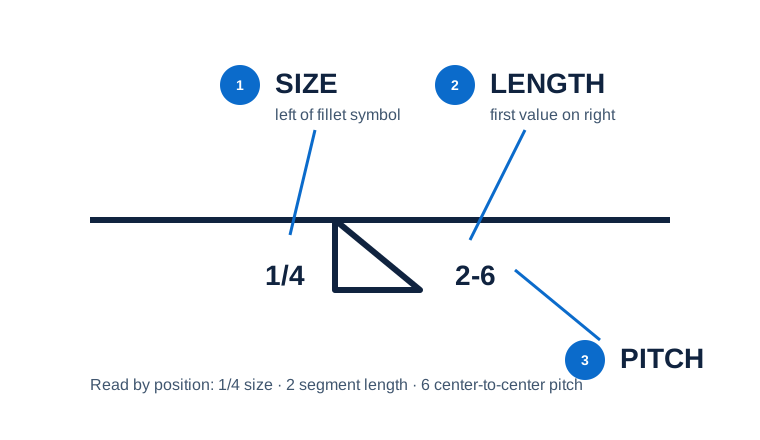
Size, Length & Pitch
Read values by position instead of by size or visual prominence
KEY CHECKA number has no meaning until its symbol and position are known.
SYMBOL 06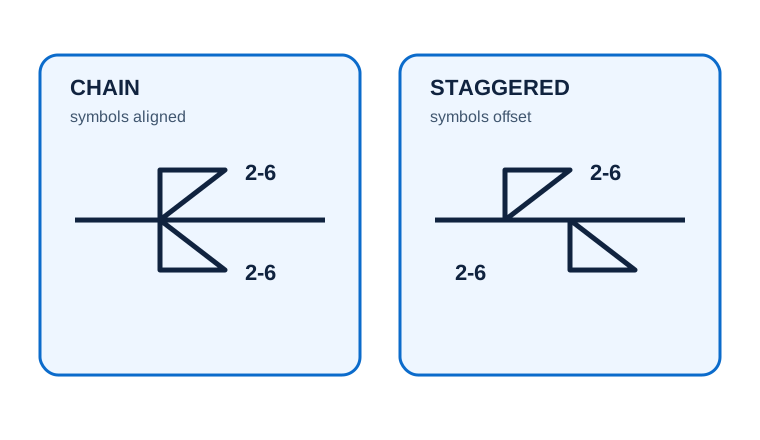
Intermittent Welds
Read segment length and center-to-center pitch
KEY CHECKPitch locates centers; it does not measure empty space.
MODULE
0/9Supplementary Symbols
Marks that modify location, extent, backing, penetration, contour, or finish.
SYMBOL 09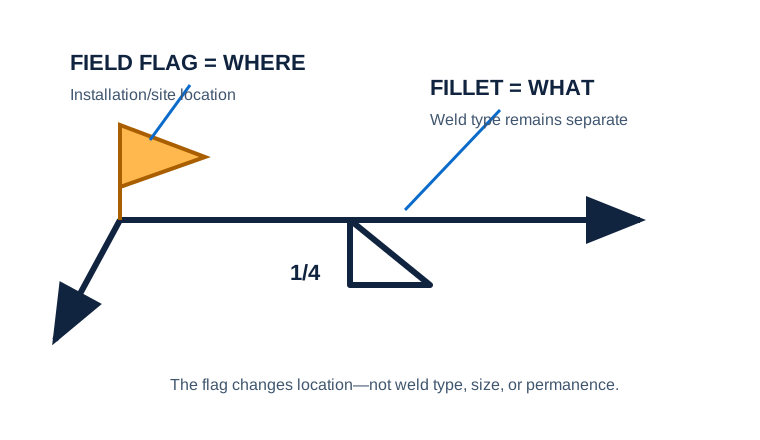
Field Weld
Recognize the field-weld flag at the arrow/reference-line junction
KEY CHECKThe flag tells where; the elementary symbol tells what.
SYMBOL 10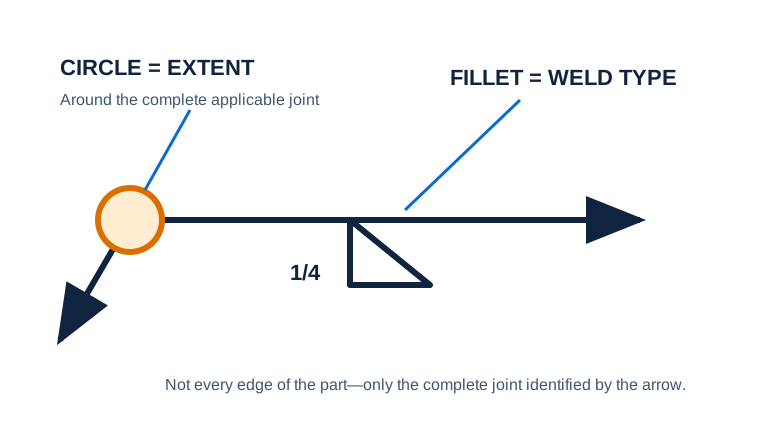
Weld All Around
Recognize the all-around circle at the arrow/reference junction
KEY CHECKAll around follows one joint boundary, not every edge you can see.
SYMBOL 18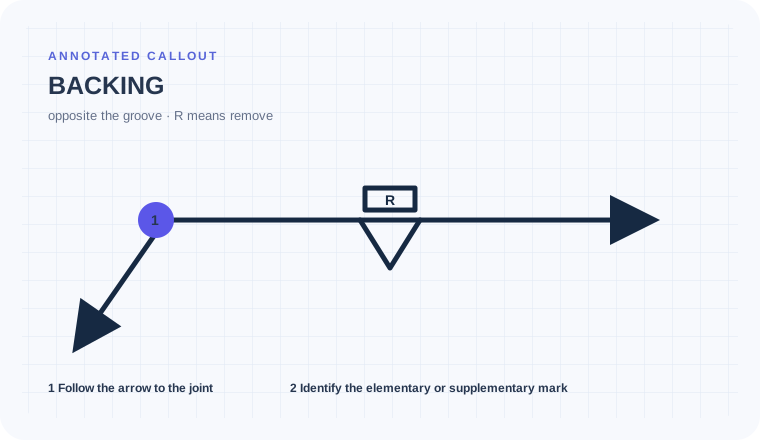
Backing
Recognize backing information associated with a groove weld
KEY CHECKBacking supports the root; R tells you not to leave it there.
SYMBOL 19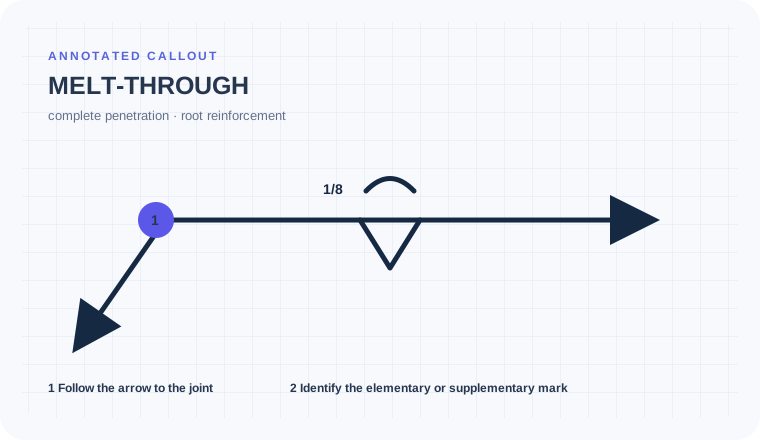
Melt Through
Recognize a specified melt-through/root-reinforcement requirement
KEY CHECKMelt-through is a controlled result, not uncontrolled burn-through.
SYMBOL 20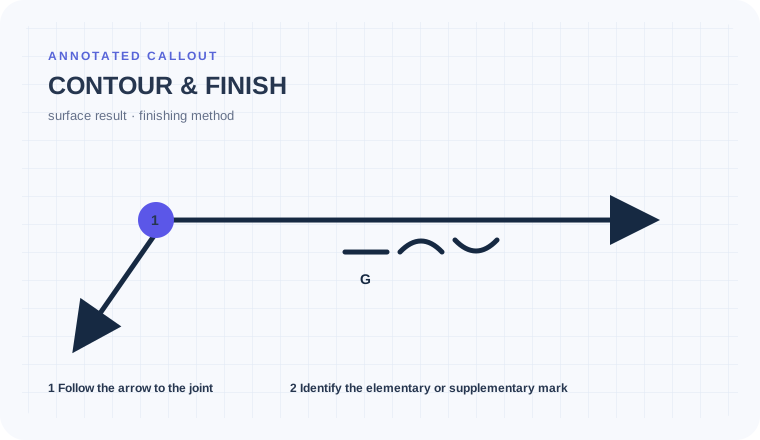
Contour & Finish
Separate weld contour from weld type
KEY CHECKWeld type tells what to make; contour tells the shape; finish tells how to get there.
SYMBOL 24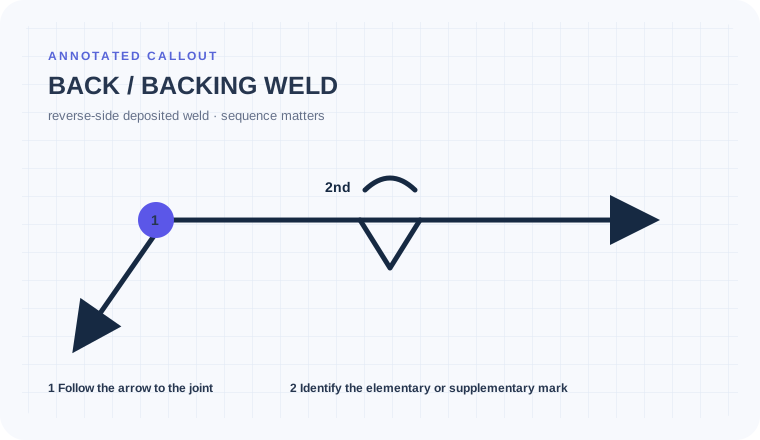
Back / Backing Weld
Distinguish deposited back/backing weld metal from backing material
KEY CHECKSame mark, different sequence: before is backing weld; after is back weld.
SYMBOL 25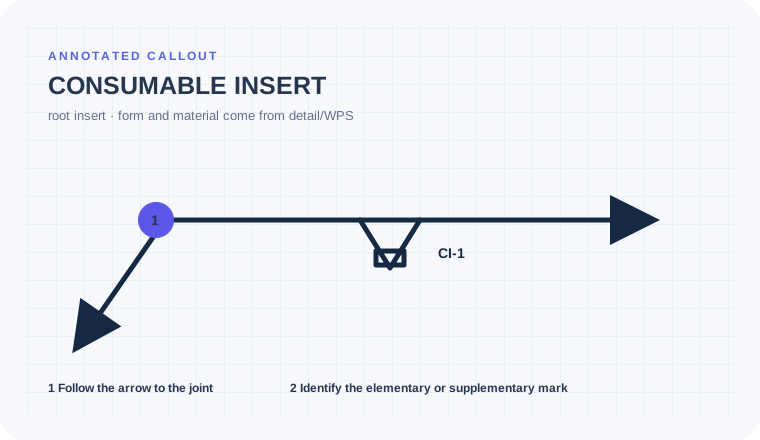
Consumable Insert
Identify a consumable insert at the groove root
KEY CHECKAn insert is root filler by design—not generic backing by shape.
SYMBOL 26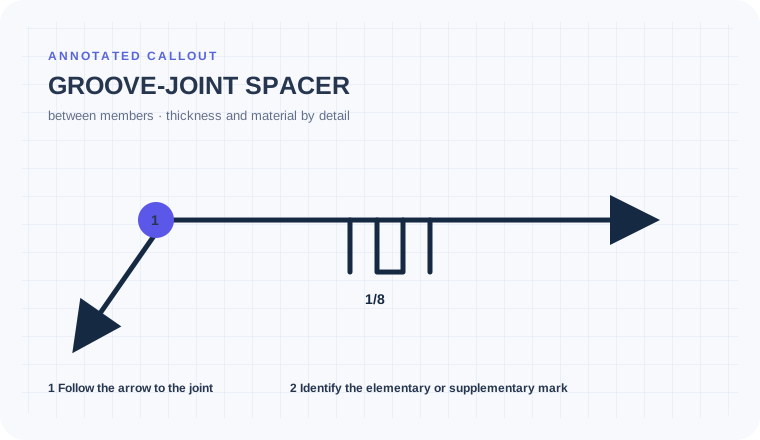
Spacer
Distinguish a physical spacer from root opening
KEY CHECKSpacer between; backing behind; root opening is empty space.
SYMBOL 27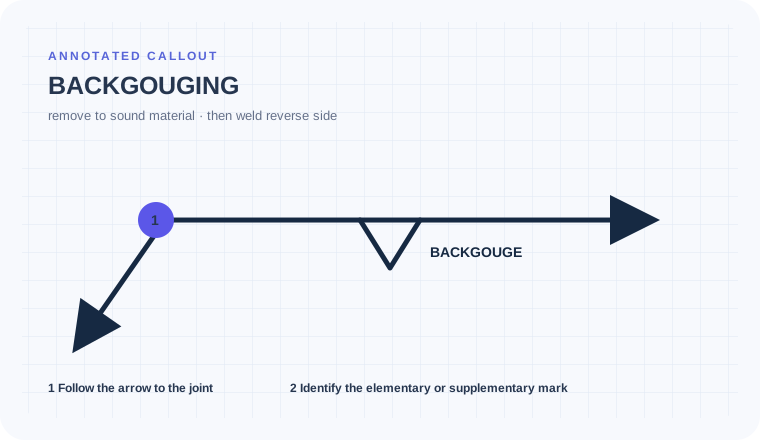
Backgouging
Recognize backgouging as material removal rather than welding
KEY CHECKGouge to the accepted condition—then weld; do not confuse removal with deposition.
Each guide answers one practical blueprint-reading question.
Original diagrams connect each mark to its position and meaning.
Six questions test recognition, placement, comparison, and drawing context.
Return to Symbol Sprint when you can explain the symbol without guessing.
ABOUT THE SYMBOL LIBRARY
What learners need to know
Where should a beginner start?
Start with Symbol Anatomy, then Arrow Side vs Other Side. Those two lessons establish the context needed for every weld type and dimension that follows.
Which drawing convention is used?
The examples use common AWS-style placement for US blueprint-reading practice. ISO 2553 systems can differ, so always confirm the governing standard.
How is reading progress saved?
Guides you mark as read are stored locally in this browser. This is a reading marker, not a mastery score, and an account is not required.