Field Weld Symbol
The field weld flag indicates that the specified weld is to be made at the installation or field location rather than as a shop weld. It changes where the weld is made, not the elementary weld type.
- Recognize the field-weld flag at the arrow/reference-line junction
- Separate weld location from weld type
- Find the erection or site condition that controls when the weld is made
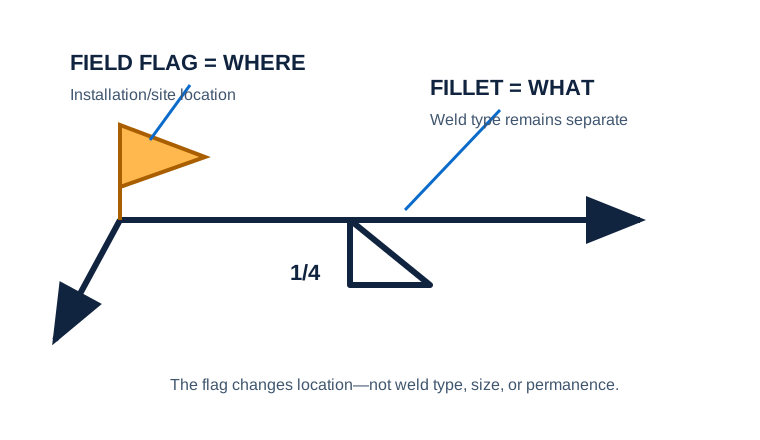
Modifier versus weld type
A field flag changes where the operation happens, which affects access, sequencing, fit-up, weather controls, inspection, and cost—but it does not name the weld itself.
A fillet weld carries a flag at the junction
The assembly drawing includes shop-fabricated members that will be joined after erection.
Read the triangle as the fillet type and the flag as a field-location requirement. Then find erection notes, access constraints, and any site-specific procedure requirements.
The weld is not completed prematurely in the shop or mistaken for a different weld family.
Put the weld on the right work package.
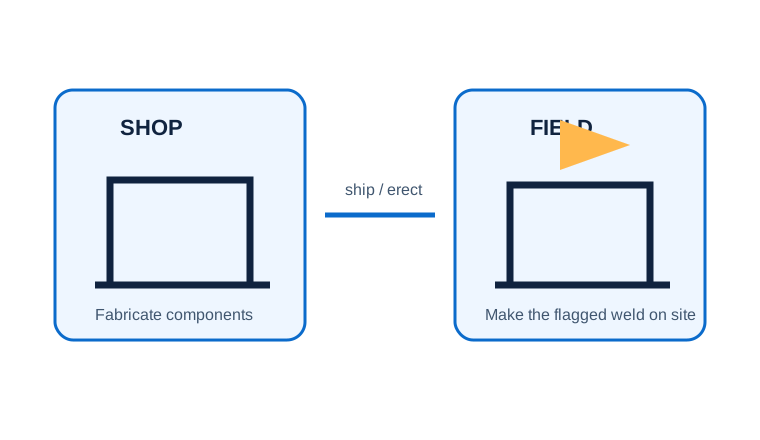
A splice assembly includes shop welds completed before shipment and one flagged joint completed after erection. The flag changes location, not weld type.
Locate the flag at the arrow/reference-line junction.
Read the elementary symbol separately; the flag does not turn a fillet into another weld family.
Confirm whether field access and inspection are available before scheduling the joint.
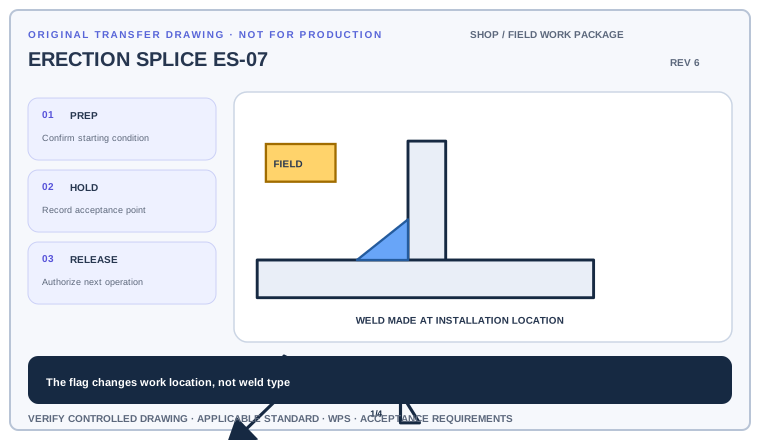
Split the marked joints into SHOP and FIELD work packages, then list the access, weather protection, equipment, inspection, and WPS questions triggered by the flagged joint.
Deliverable · A two-column shop/field execution plan for the spliceCompare with the field read +
The flagged joint is welded at the field location using the weld type and dimensions shown elsewhere on the callout. The other joints remain shop work unless separately marked or noted.
Read location and weld type as separate decisions
Begin with the cue in the first column. The final column records the drawing, detail, procedure, or acceptance question that this callout cannot answer by itself.
| Visual cue | What it establishes | What still needs verification |
|---|---|---|
| Flag at arrow/reference junction | Weld is to be made in the field/site context | The flag does not define size, side, or process. |
| Elementary symbol on the line | The actual weld type | Decode it independently from the location flag. |
| Tail or referenced note | May supply site procedure or specification information | Confirm project-specific field conditions. |
Turn the flag into an execution plan
Find the flag at the junction of the arrow and reference line, then continue reading the elementary weld symbol, side, dimensions, and tail as normal.
- Locate the flag at the arrow/reference-line junction.
- Identify the joint and side significance.
- Read the elementary weld symbol and dimensions.
- Check erection, site, access, and procedure notes that govern field work.
Field location is not weld extent
Field-weld flag
Controls location of welding
Evidence to useIs the flag attached at the arrow/reference junction?Weld-all-around circle
Controls extent around the joint
Evidence to useA circle is not a location instruction.Planning errors caused by overlooking one small flag
Modifier versus weld type
The flag answers where. The elementary symbol answers what.
Temporary-work assumption
Field location does not imply temporary status; the complete drawing and specification define permanence and acceptance.
Missing field constraints
Access, sequence, weather protection, inspection, and WPS requirements may appear elsewhere in project documents.
Can this joint actually be completed and inspected in the field?
Use the full list before fabrication, fit-up, or inspection. This is a drawing-reading handoff—not a substitute for the governing acceptance standard.
- 01Identify the base weld type
- 02Confirm the field flag
- 03Read side and dimensions
- 04Find erection/site notes
- 05Verify access, procedure, and inspection plan
Evidence and limits for this Field Weld lesson
This guide teaches common AWS-style drawing interpretation. It is educational material, not a substitute for the purchased standard, project specification, code, WPS, or qualified engineering direction.
How this page was made. The training diagrams, worked example, comparisons, and questions are original educational material. Read the editorial and technical review policy for the full process.
Save your place after Field Weld.
This marker records reading progress only; it does not mean the topic is mastered. Use the six-question practice page to check your understanding.
Build outward from Field Weld
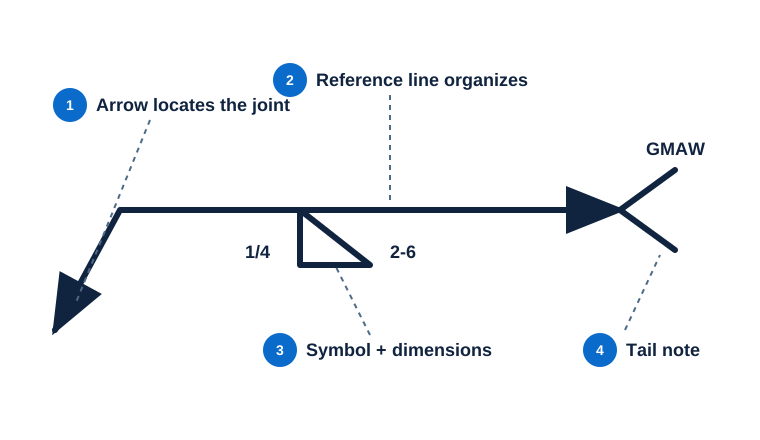 Symbol Anatomy
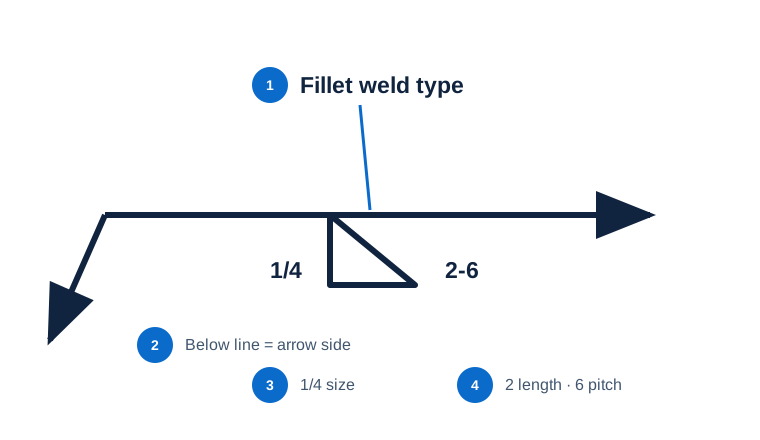 Fillet Weld
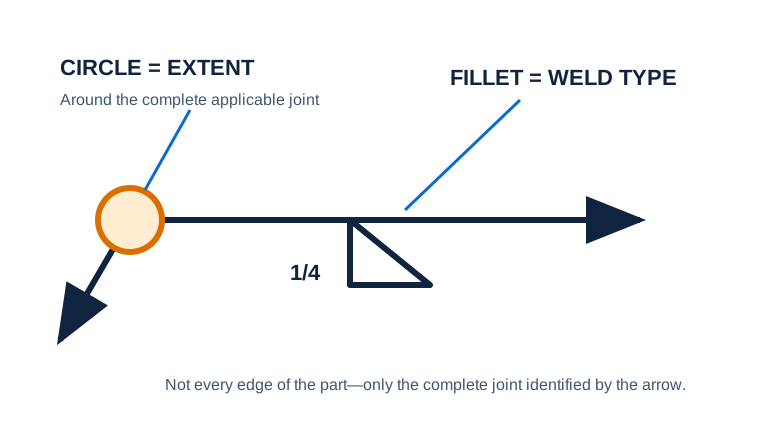 Weld All Around
Educational practice only. Verify production work against the governing drawing, applicable standard, WPS, and qualified instruction.