Spot and Seam Weld Symbols
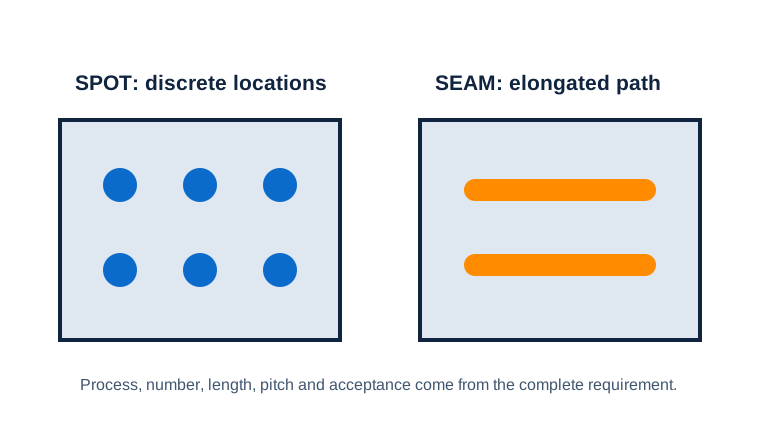
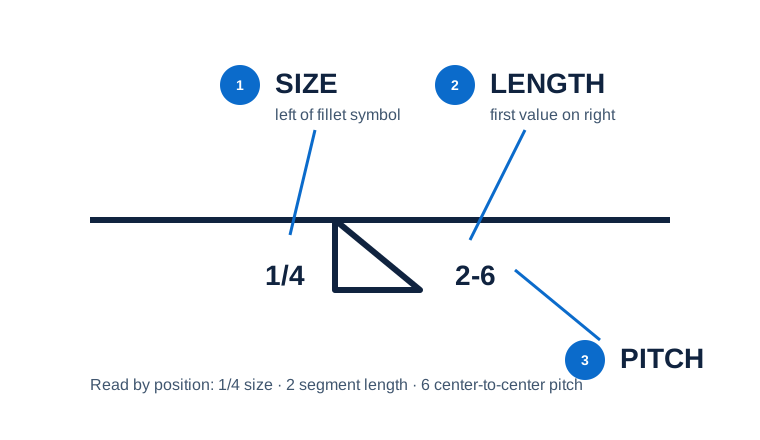
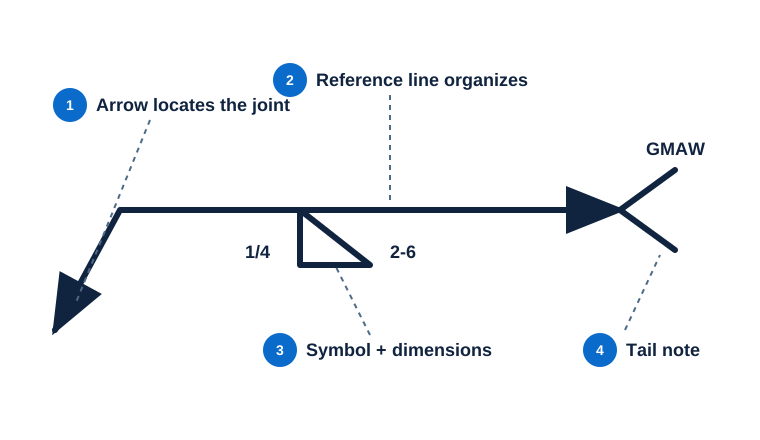
Spot welds create localized welds at discrete locations; seam welds create an elongated weld along a line or path. Under AWS A2.4:2020, a value to the left designates weld size; any required strength belongs in a tail note. Number, length, and pitch are read in their applicable positions.
- Distinguish spot, seam, and plug/slot instructions
- Read size, count, pitch, and tail-noted strength without borrowing fillet rules
- Connect the symbol to a lap-joint production decision
Spot versus plug
Spot and seam symbols often appear on sheet assemblies where joint preparation, electrode access, process, and spacing matter more than a conventional weld bead profile.
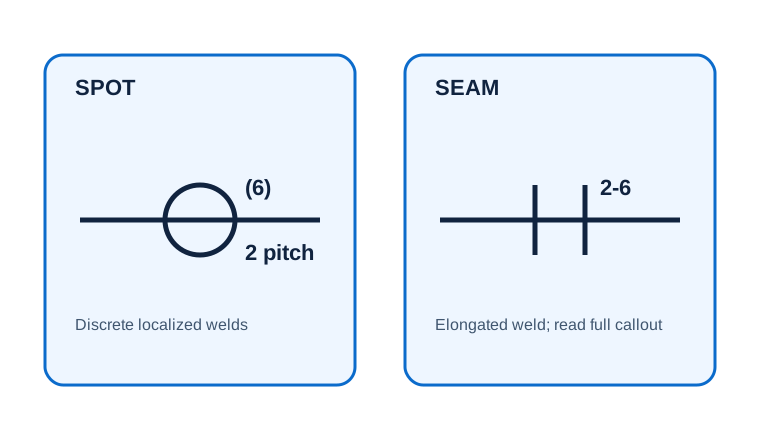
A sheet-metal lap joint shows a circle with (6) and 2 pitch
The assembly needs repeated localized welds rather than a continuous bead.
Recognize a spot-weld instruction, read any left-side value as size, treat (6) as the required count in this callout, and read 2 as center-to-center pitch. Confirm any strength requirement and process in the tail or notes.
The callout is not misread as a plug weld, as a fillet weld with six-inch length, or with a left-side size incorrectly treated as strength.
Spot, seam, projection, and plug do not share preparation
Spot weld
A localized weld at a discrete location
Evidence to useLook for size, count, pitch, tail-noted strength, and electrode access.Seam weld
An elongated weld along a line or path
Evidence to useConfirm continuous versus intermittent extent.Plug weld
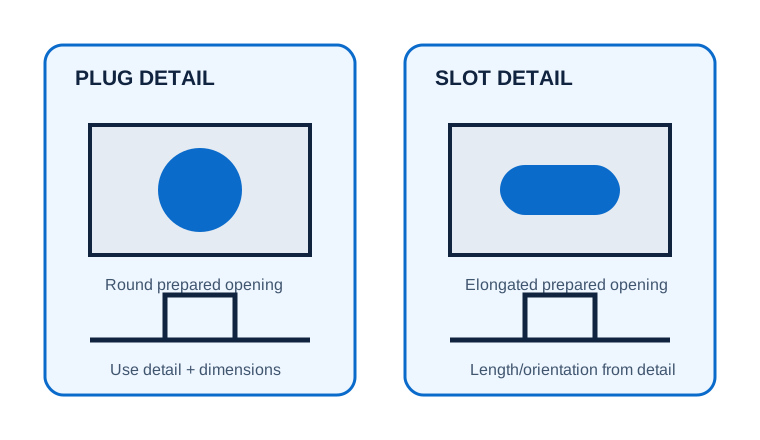
Weld metal deposited into a prepared opening
Evidence to useLook for a hole/slot detail; do not infer one from a spot circle.Match each resistance-weld mark to its job
Begin with the cue in the first column. The final column records the drawing, detail, procedure, or acceptance question that this callout cannot answer by itself.
| Visual cue | What it establishes | What still needs verification |
|---|---|---|
| Circle elementary symbol | Spot or projection weld family in the illustrated convention | A circle does not mean weld-all-around when it is centered on the reference line. |
| Two parallel lines | Seam weld family | Required seam length, spacing, and process still come from the full callout. |
| Parenthesized count | Number of spot welds where that notation is used | Do not treat count as diameter or strength. |
| Pitch to the right | Center-to-center spacing of repeated spots or seam segments | Confirm the layout and whether the seam is continuous or intermittent. |
Separate discrete locations from a controlled seam path.
An enclosure flange combines a row of spot welds with a separate seam-welded edge. Counts, pitch, seam length, and process notes serve different operations.
Do not read the circle as weld-all-around when it sits on the reference line.
Keep the parenthesized spot count separate from pitch.
Do not place a strength requirement in the left-side size position.
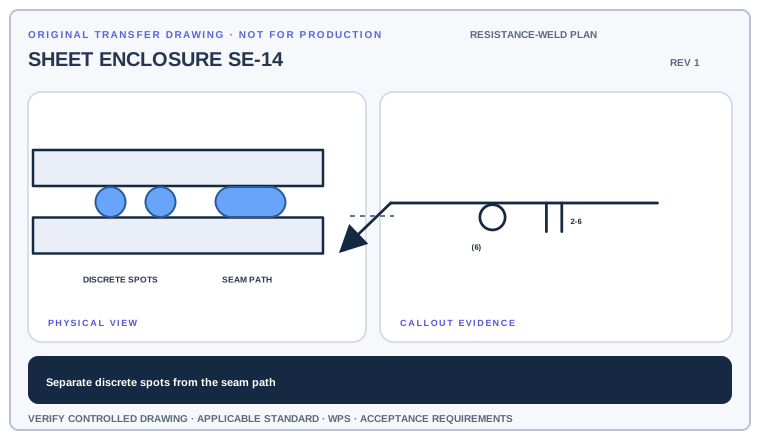
Color-code the discrete spots and the seam path, then write a production note that places size on the left and keeps any strength requirement in the tail or note.
Deliverable · A marked-up flange plan with separate spot and seam instructionsCompare with the field read +
The circle marks localized spot welds at the stated count and pitch; the parallel-line symbol identifies a seam operation with its own length or pitch. Process and strength requirements belong in the supporting tail or note.
Translate the callout into a sheet-metal process plan
Identify the circle for spot or the seam symbol first. Then read the values by position and verify whether the symbol has side significance for the process and convention used on the drawing.
- Distinguish the spot and seam elementary symbols.
- Read a left-side value as weld size, not strength.
- Find any required strength, process, or specification information in the tail or notes.
- Read number, length, and pitch in their applicable positions, then confirm member arrangement.
Borrowed fillet rules that corrupt sheet-weld callouts
Spot versus plug
A plug weld fills a prepared opening; a spot weld creates a localized joint, commonly between overlapping members, without that plug opening.
Assuming continuity
A seam callout can include length and pitch. Read the complete instruction instead of assuming an uninterrupted seam.
Reusing fillet rules
Dimension meaning and placement depend on the elementary symbol and process. Do not transfer fillet conventions blindly.
Are count, pitch, path, process, and access all accounted for?
Use the full list before fabrication, fit-up, or inspection. This is a drawing-reading handoff—not a substitute for the governing acceptance standard.
- 01Name spot or seam
- 02Read left-side value only as size
- 03Find any strength requirement in the tail/note
- 04Read count and pitch
- 05Confirm extent, process, access, and member arrangement
Evidence and limits for this Spot & Seam Welds lesson
This guide teaches common AWS-style drawing interpretation. It is educational material, not a substitute for the purchased standard, project specification, code, WPS, or qualified engineering direction.
How this page was made. The training diagrams, worked example, comparisons, and questions are original educational material. Read the editorial and technical review policy for the full process.
Save your place after Spot & Seam Welds.
This marker records reading progress only; it does not mean the topic is mastered. Use the six-question practice page to check your understanding.
Build outward from Spot & Seam Welds
 Plug & Slot Welds
 Size, Length & Pitch
 Symbol Anatomy
Educational practice only. Verify production work against the governing drawing, applicable standard, WPS, and qualified instruction.