Intermittent Weld Symbols
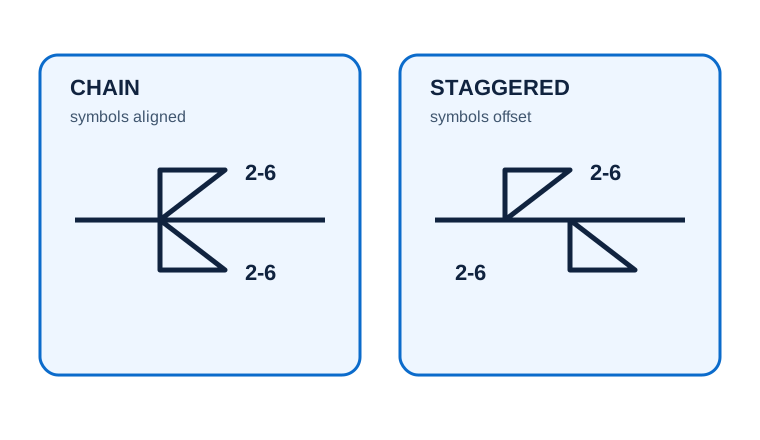
An intermittent weld is made in separate segments rather than continuously along the joint. The callout gives segment length and pitch, while symbol arrangement distinguishes chain and staggered patterns for welds on both sides.
- Read segment length and center-to-center pitch
- Calculate the clear unwelded gap for a simple pattern
- Distinguish chain from staggered placement
Wrong spacing
Intermittent welds balance strength, heat input, distortion, weight, and cost. Misreading pitch as gap changes both weld quantity and performance.
Lay out the first three segments, not just the first one.
A long stiffener uses 2-unit welds at 6-unit pitch. A second view determines whether the pattern is chain or staggered and where it begins.
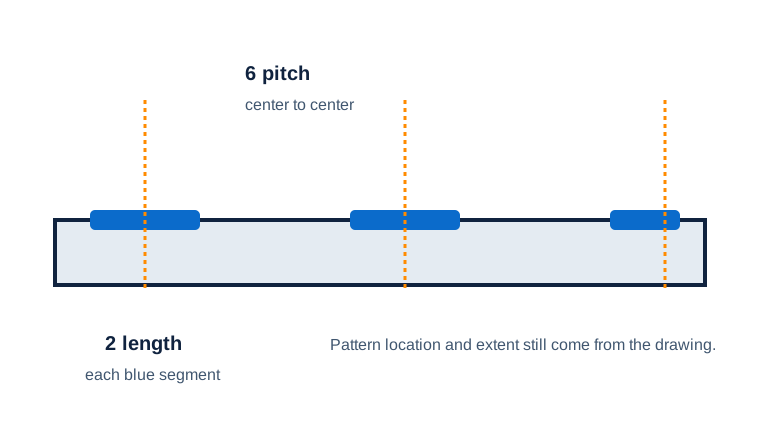
Measure pitch from center to center.
Use symbol alignment—not the drawing title—to decide chain versus staggered.
Find the first and last controlled locations before multiplying segment count.
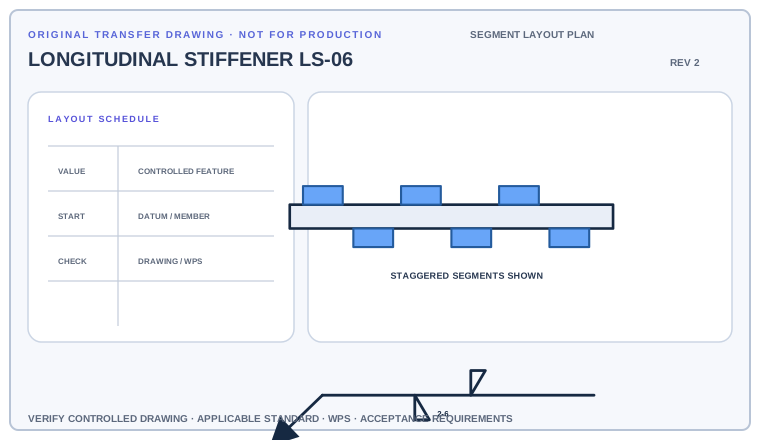
Place three segment centerlines on each side, calculate the simple clear gap, and explain how the symbol arrangement changes a chain layout into a staggered one.
Deliverable · A six-segment layout with centers, clear gaps, and pattern type labeledCompare with the field read +
Each segment is 2 units long at 6-unit centers, leaving a 4-unit clear gap in the simple repeating run. Aligned symbols produce chain placement; offset symbols produce staggered placement.
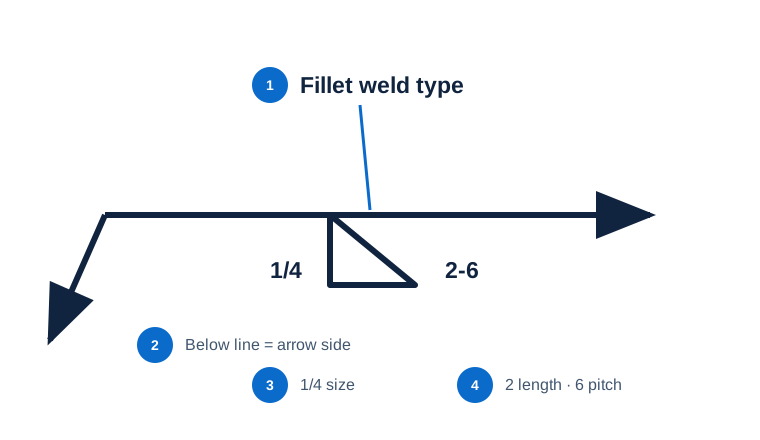
Two fillet callouts both say 2-6
One print aligns the segments across the joint; another offsets them.
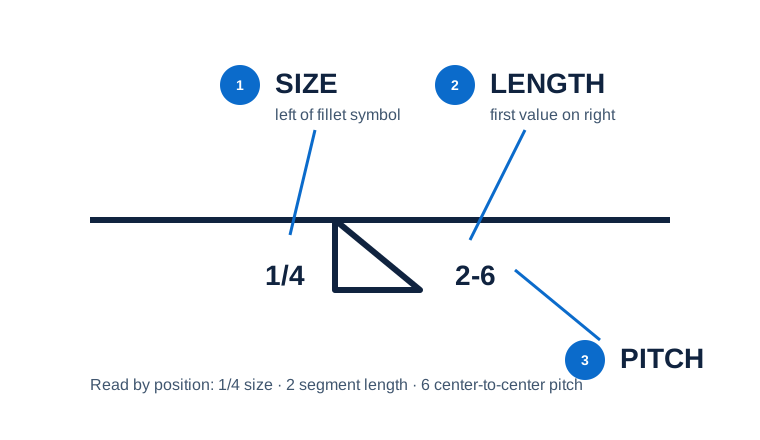
Read 2-long segments at 6 pitch. Use symbol arrangement to distinguish chain from staggered; the simple clear gap is 6 minus 2, or 4 units.
The crew reproduces the intended pattern rather than spacing each segment six clear units apart.
Read the pair as length then pitch
Begin with the cue in the first column. The final column records the drawing, detail, procedure, or acceptance question that this callout cannot answer by itself.
| Visual cue | What it establishes | What still needs verification |
|---|---|---|
| 2-6 to the right | 2 segment length at 6 center-to-center pitch | Units come from the drawing; 6 is not the clear gap. |
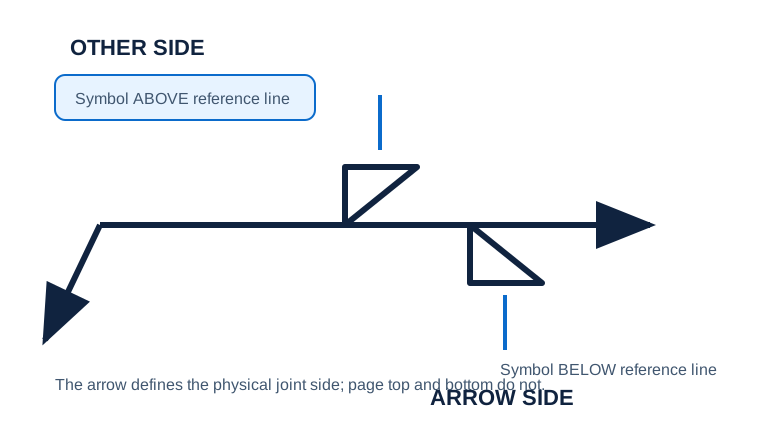
| Symbols aligned across the line | Chain intermittent arrangement | Check both-side dimensions rather than assuming they match. |
| Symbols offset across the line | Staggered intermittent arrangement | The graphic arrangement communicates offset; do not align the segments. |
Chain and staggered share numbers but not locations
Chain
Opposing segments line up
Evidence to useWould a section through one segment cross welds on both sides?Staggered
Opposing segments alternate
Evidence to useAre the elementary symbols visibly offset?Continuous
No repeating segment/pitch pattern is specified
Evidence to useDo not convert an intermittent callout into a full-length weld.Build a repeatable segment layout
Read the length–pitch pair, then inspect how symbols on both sides of the reference line align. Opposed symbols indicate chain intermittent welds; offset symbols indicate staggered intermittent welds.
- Confirm the weld type and side or sides.
- Read segment length first and pitch second.
- For both-side patterns, compare symbol alignment across the reference line.
- Use the drawing dimensions to locate where the pattern begins and ends.
Spacing errors that multiply down the joint
Wrong spacing
For 2-long segments at 6 pitch, a simple aligned pattern has a 4-unit clear gap—not a 6-unit gap.
Missing pattern arrangement
Chain and staggered patterns can share identical length and pitch. Symbol alignment carries the difference.
Inventing a start point
The callout defines the pattern, but drawing dimensions or notes may be needed to locate its extent.
Anchor the pattern before counting welds
Use the full list before fabrication, fit-up, or inspection. This is a drawing-reading handoff—not a substitute for the governing acceptance standard.
- 01Read segment length
- 02Read center-to-center pitch
- 03Identify chain or staggered
- 04Check start/end location
- 05Confirm whether quantity or extent is separately controlled
Evidence and limits for this Intermittent Welds lesson
This guide teaches common AWS-style drawing interpretation. It is educational material, not a substitute for the purchased standard, project specification, code, WPS, or qualified engineering direction.
How this page was made. The training diagrams, worked example, comparisons, and questions are original educational material. Read the editorial and technical review policy for the full process.
Save your place after Intermittent Welds.
This marker records reading progress only; it does not mean the topic is mastered. Use the six-question practice page to check your understanding.
Build outward from Intermittent Welds
 Size, Length & Pitch
 Fillet Weld
 Arrow Side vs Other Side
Educational practice only. Verify production work against the governing drawing, applicable standard, WPS, and qualified instruction.