U-Groove Weld Symbol
A U-groove weld uses concave edge preparation on both members, producing a narrow root region with curved groove faces. The detail controls radius, depth, angle, and root opening.
- Recognize curved preparation on both members
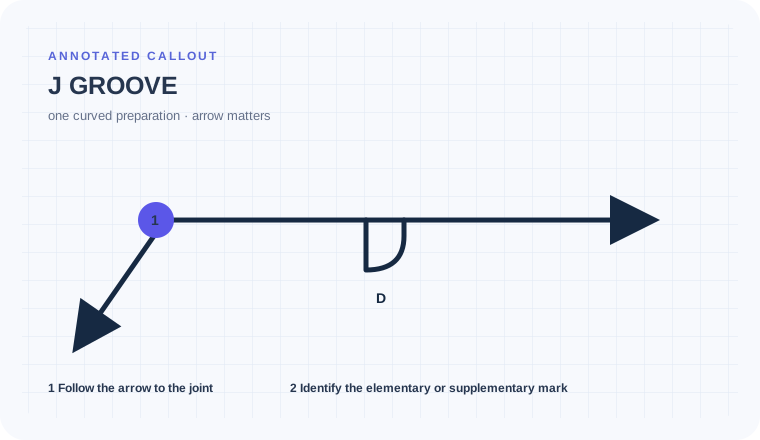
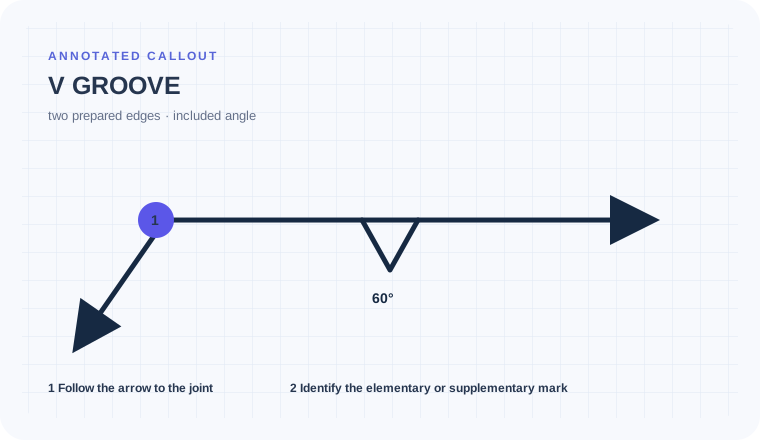
- Distinguish U groove from V and J families
- Find the radius, root face, depth, and fit-up information required to machine the joint
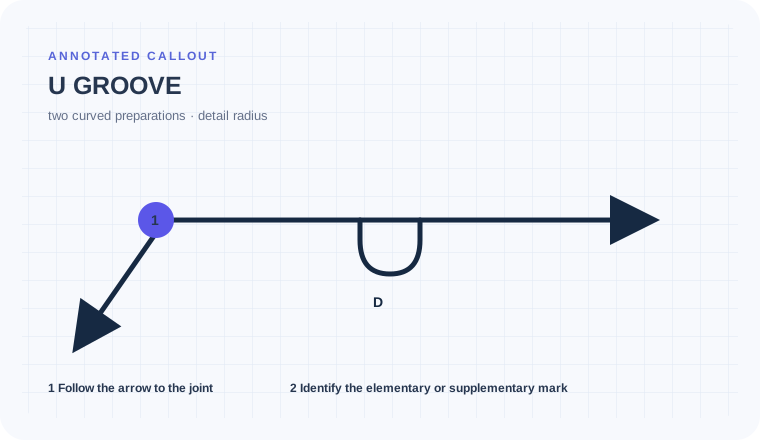
Reading U as contour
U preparations can reduce weld volume in thick sections but require controlled machining and fit-up. The elementary U shape alone is not a machining detail.
A thick-section butt joint uses a U instead of a V
The design aims to limit weld volume while maintaining root access.
Treat the U as a symmetric curved-preparation family, then find radius, depth, root face/opening, and single- versus double-U details before fabrication.
The joint is prepared to the engineered profile rather than approximated from the symbol icon.
U, J, and contour marks can look related but do different work
U groove
Curved preparation on both members
Evidence to useIs the joint symmetric?J groove
Curved preparation on one member
Evidence to useWhich member receives the J preparation?V groove
Straight prepared faces
Evidence to useCompare weld volume and machining requirements in the detail.Separate the U family from its machining dimensions
Begin with the cue in the first column. The final column records the drawing, detail, procedure, or acceptance question that this callout cannot answer by itself.
| Visual cue | What it establishes | What still needs verification |
|---|---|---|
| U-shaped elementary symbol | Curved preparation on both mating members | Exact radius is not conveyed by the icon’s drawn curvature. |
| Symbols on both sides | Double-U preparation/welding where specified | Confirm alignment and remaining root section in the detail. |
| Dimensions/detail reference | Controls radius, depth, root face, and opening | Do not fabricate from the elementary mark alone. |
The U names a family; the machining detail creates the joint.
A heavy-plate splice uses curved preparation on both members to control weld volume. Radius, root face, depth, and opening are supplied by the machining detail.
Do not read the U shape as a finished weld contour.
Require a controlled radius and depth rather than copying the icon shape.
Confirm whether the joint is single-U or double-U before planning access.
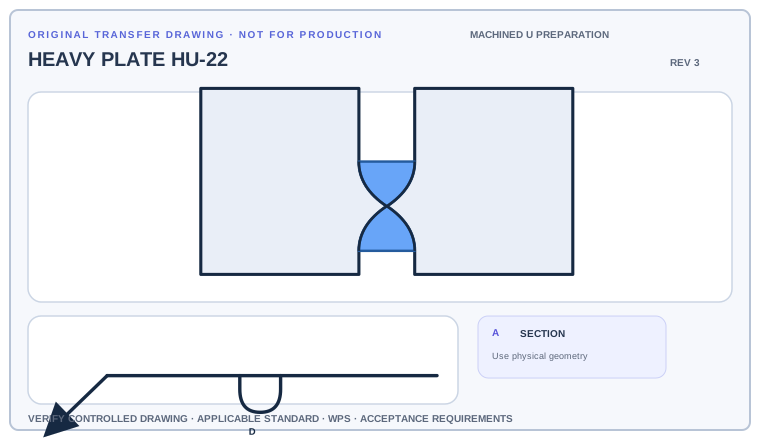
Prepare a machining request listing every dimension the U symbol cannot supply by itself, then mark which two surfaces receive curved preparation.
Deliverable · A machine-shop request tied to both joint membersCompare with the field read +
Both members receive the curved preparation defined by the detail. The symbol identifies the U-groove family; machining geometry and fit-up come from controlled dimensions and the WPS.
Hand the machine shop enough information to cut the joint
Recognize the symmetric U symbol, determine the applicable side, and read depth and weld size separately before consulting the joint detail for curved preparation geometry.
- Identify the symmetric U-groove family.
- Determine whether it is single-U or double-U from symbol placement.
- Read depth, weld size, and root opening in their assigned locations.
- Use the joint detail for radius, root face, and preparation tolerances.
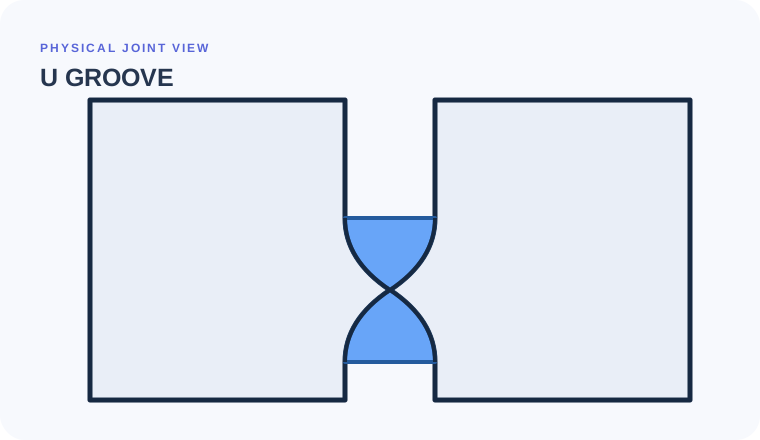
Curves that invite unsupported radius assumptions
Reading U as contour
A U-groove elementary symbol identifies joint preparation; a contour mark modifies the finished weld surface.
Inventing a radius
The symbol does not supply a machining radius unless the drawing or detail gives one.
Missing the second side
A double-U must be recognized from information on both sides of the reference line.
Could the machine shop cut this U without asking what you meant?
Use the full list before fabrication, fit-up, or inspection. This is a drawing-reading handoff—not a substitute for the governing acceptance standard.
- 01Confirm single/double U
- 02Find preparation radius
- 03Read depth and root face
- 04Read root opening
- 05Verify machining tolerance and WPS
Evidence and limits for this U Groove lesson
This guide teaches common AWS-style drawing interpretation. It is educational material, not a substitute for the purchased standard, project specification, code, WPS, or qualified engineering direction.
How this page was made. The training diagrams, worked example, comparisons, and questions are original educational material. Read the editorial and technical review policy for the full process.
Save your place after U Groove.
This marker records reading progress only; it does not mean the topic is mastered. Use the six-question practice page to check your understanding.
Build outward from U Groove
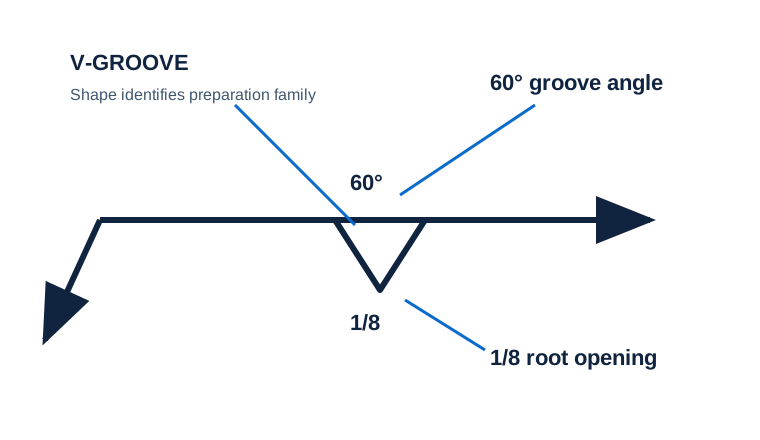 Groove Welds Overview
 J Groove
 V Groove
 Size, Length & Pitch
Educational practice only. Verify production work against the governing drawing, applicable standard, WPS, and qualified instruction.