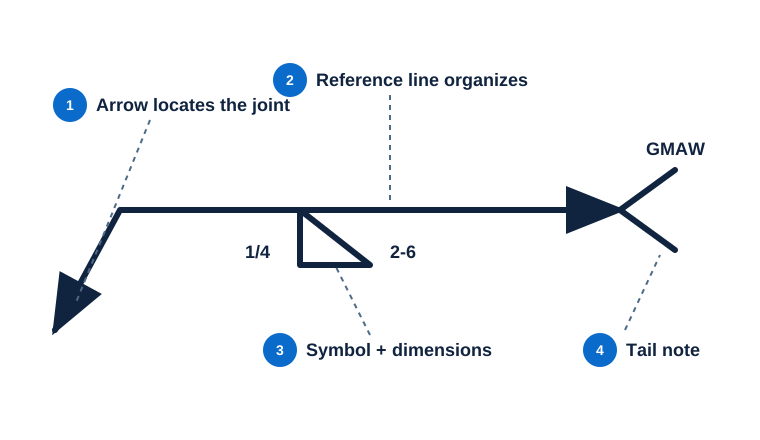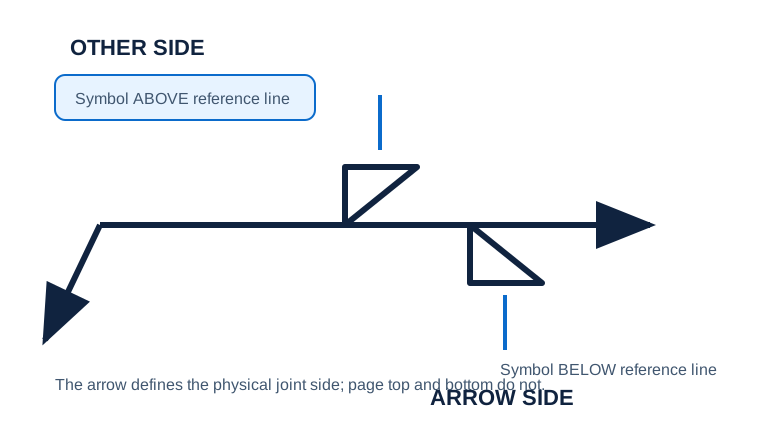
Arrow Side vs Other Side
FIX THISI keep confusing arrow direction with weld side.
Stop using arrow direction as a shortcut. Read symbol placement above or below the reference line and name the applicable side with confidence.
Do not replay a broad quiz when one rule is causing the misses. Choose the exact reading problem, study the deciding cue, then make five progressively harder decisions while the correction is still fresh.
Each card tells you the mistake it fixes, the decision you should be able to make afterward, and where that decision matters.
FIX THISI keep confusing arrow direction with weld side.
Stop using arrow direction as a shortcut. Read symbol placement above or below the reference line and name the applicable side with confidence.
FIX THISI see the numbers but assign them to the wrong thing.
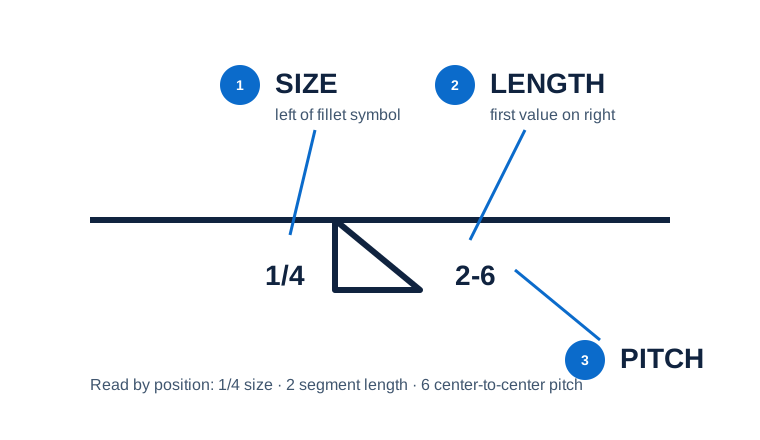
Practice welding symbol size, length, and pitch by assigning each number to the job it controls on intermittent-weld callouts.
FIX THISI recognize the triangle but miss what the full callout requires.
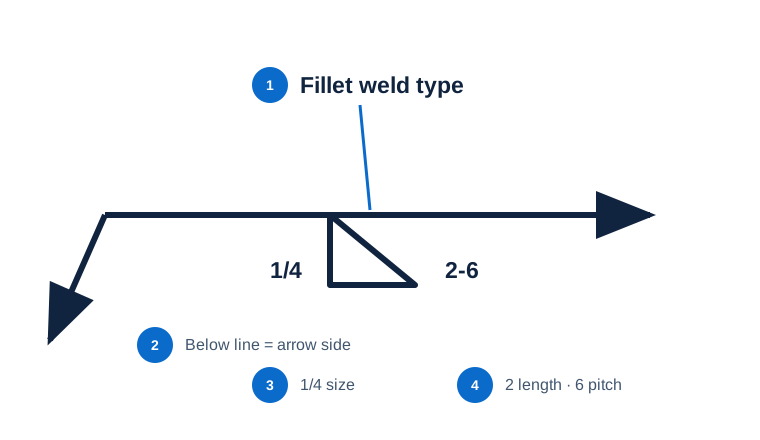
Move beyond spotting the triangle. Read side, size, length, pitch, and supplementary instructions as one complete fillet-weld callout.
FIX THISV, bevel, U, and J groove symbols blur together.
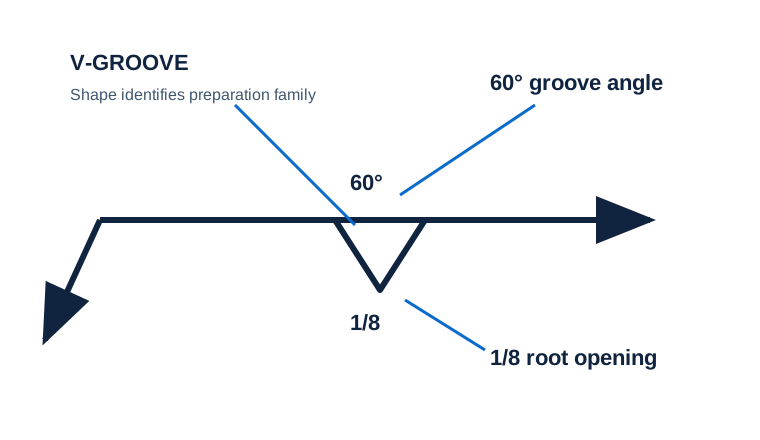
Practice groove weld symbols by comparing square, V, bevel, U, J, and flare preparations according to which members are prepared.
FIX THISI mix up the flag, the circle, and the weld type.
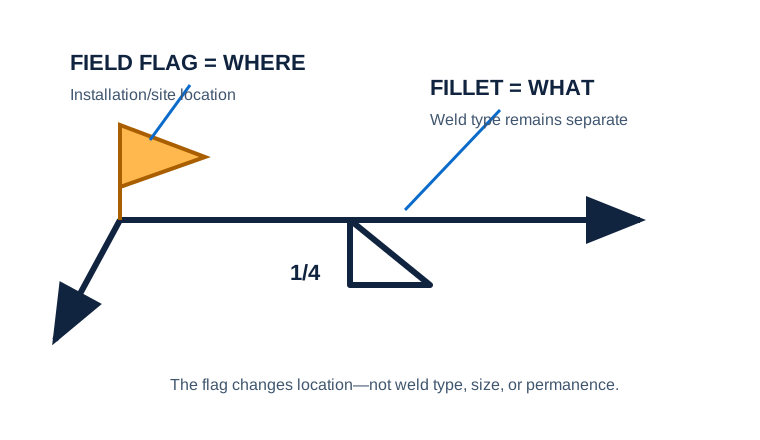
Keep location and extent separate. The flag says where the weld is made; the circle says how far it continues around the joint.
FIX THISI know the symbols, but still make avoidable reading errors.
Practice common welding symbol mistakes with a mixed stop-check for wrong-side, wrong-number, and wrong-modifier reads before they become shop-floor decisions.
Each round moves from cue recognition to blueprint transfer, then asks for the field decision. There is no countdown; the goal is a defensible read, not a lucky fast click.
Identify the position, mark, or value that actually controls the answer.
Use the same rule on an annotated callout instead of relying on shape memory.
The right answer and the reason appear immediately; misses move into Mistake Review.
The goal is one reliable blueprint-reading decision you can repeat under pressure.
Most drills contain five focused checks and take about four to seven minutes, including feedback.
If the rule is new, use the linked guide first. If you already know the rule but keep missing it, start the drill and use the feedback to find the shortcut causing the error.
The exercises use common AWS-style placement for educational practice. Production interpretation must follow the governing drawing, standard, and WPS.