Melt-Through Symbol
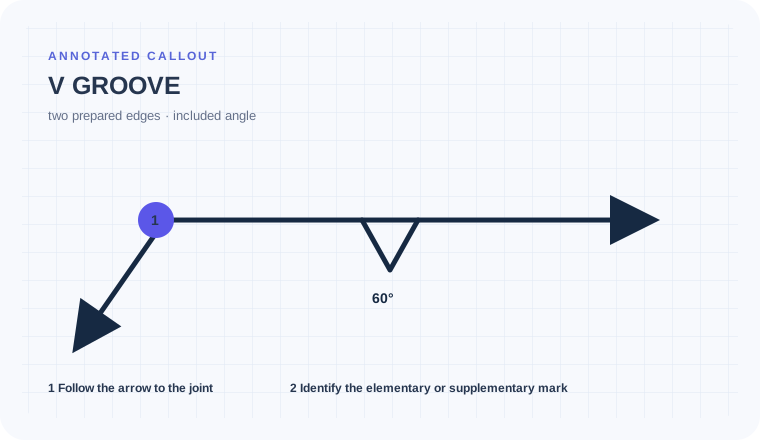
The melt-through symbol requires visible root reinforcement on the back side of a single-sided groove weld produced by complete joint penetration through the root.
- Recognize a specified melt-through/root-reinforcement requirement
- Distinguish controlled reinforcement from burn-through
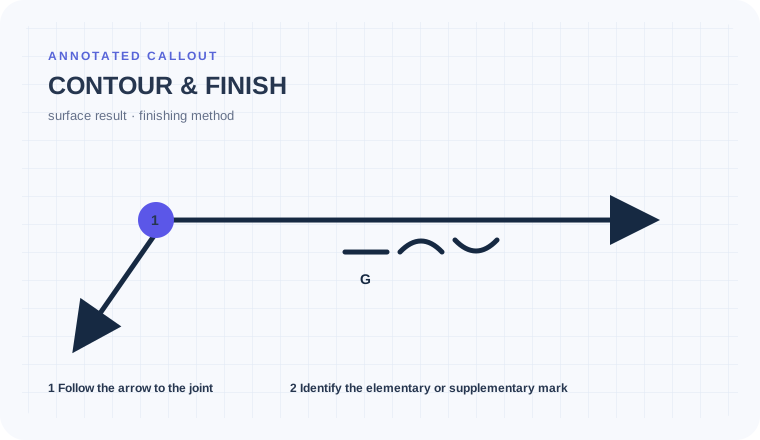
- Read contour and finish modifiers applied to the root side
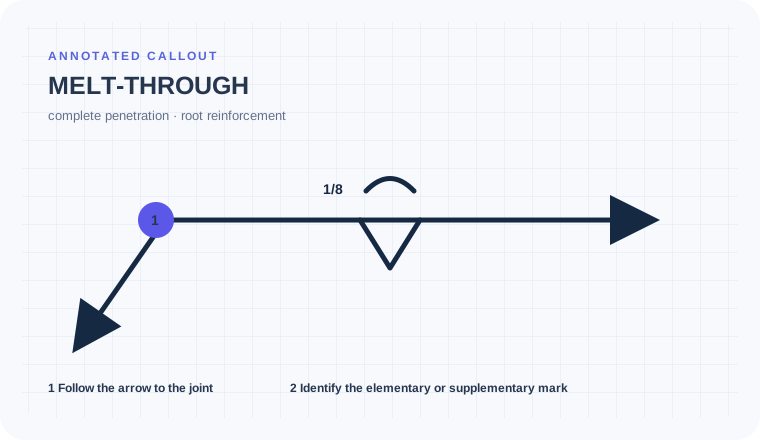
Calling it burn-through
Melt-through describes an intended back-side result. Treating it as permission for uncontrolled burn-through can create defects, excess reinforcement, or inspection failure.
A one-sided groove weld requires visible root reinforcement
The back side is not welded separately, but the drawing specifies a controlled root-side profile.
Read the melt-through symbol as the required root result, then check any reinforcement dimension, contour, finish, backing, and acceptance criteria.
The welder targets a controlled root condition rather than simply increasing heat until metal falls through.
Turn the supplementary mark into an inspection observation
Find the melt-through mark across the reference line from the groove symbol, then read any reinforcement-height dimension and contour or finish marks attached to it.
- Identify the single-sided groove-weld instruction.
- Find the melt-through symbol on the opposite side.
- Read root-reinforcement height when specified.
- Check contour, finish method, access, and acceptance requirements.
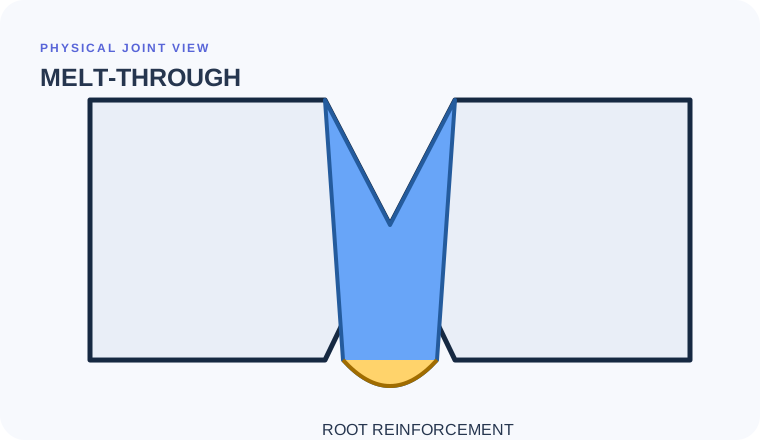
Inspect a required root result without excusing burn-through.
A one-sided groove weld requires visible root reinforcement on the opposite side. The inspection task separates controlled melt-through from an uncontrolled opening.
Locate the root side from the joint section, not from page orientation.
Read the melt-through mark as a required result, not permission for arbitrary burn-through.
Use the governing acceptance criteria for profile, fusion, and discontinuities.
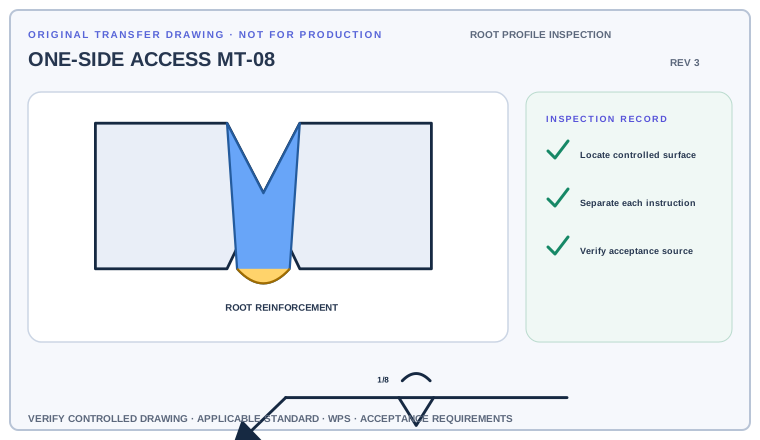
Mark the surface where root reinforcement must appear, record the specified height or contour evidence, and list the observations that would trigger rejection or engineering review.
Deliverable · A root-side inspection note tied to the opposite surfaceCompare with the field read +
The completed one-sided weld must produce the specified visible root reinforcement on the opposite surface. Excessive opening, uncontrolled profile, or unacceptable discontinuities are not justified by the melt-through symbol.
Locate the specified root reinforcement
Begin with the cue in the first column. The final column records the drawing, detail, procedure, or acceptance question that this callout cannot answer by itself.
| Visual cue | What it establishes | What still needs verification |
|---|---|---|
| Melt-through supplementary symbol | Required visible root reinforcement on the opposite side | It modifies a primary weld instruction. |
| Root reinforcement dimension | Controls the specified root-side result where provided | Use applicable acceptance criteria; more is not automatically better. |
| Contour/finish symbol | Controls final root profile and finishing method | Do not apply the modifier to the wrong side. |
When required reinforcement is confused with a defect
Calling it burn-through
The symbol specifies a controlled root condition; uncontrolled burn-through is not equivalent.
Missing reinforcement height
A value beside the melt-through mark can limit or specify root reinforcement.
Ignoring contour
Flush, convex, or finish information may modify the required root surface.
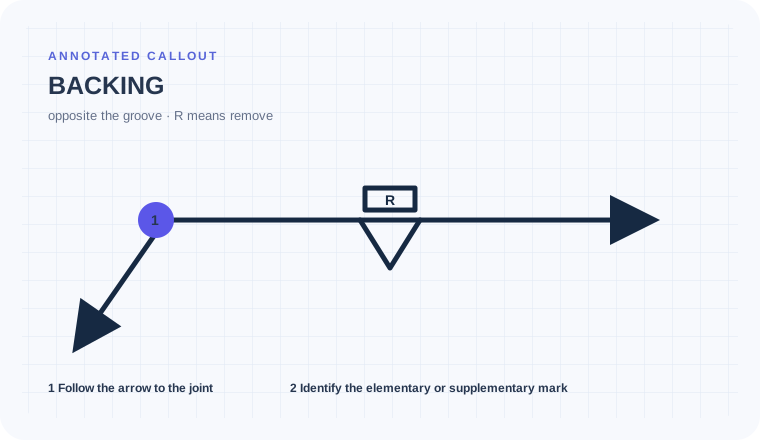
Melt-through and backing solve different root conditions
Melt-through
Intentional, specified root reinforcement
Evidence to useIs the supplementary symbol present?Burn-through
Uncontrolled excessive penetration or opening
Evidence to useIt is not made acceptable by resemblance to reinforcement.Backing
Supports the root during welding
Evidence to useBacking is a material/technique, not the final visible root condition.Does the root profile meet the governing acceptance criteria?
Use the full list before fabrication, fit-up, or inspection. This is a drawing-reading handoff—not a substitute for the governing acceptance standard.
- 01Identify the primary weld
- 02Confirm melt-through requirement
- 03Read reinforcement dimension
- 04Read contour/finish
- 05Verify root-side acceptance and access
Evidence and limits for this Melt Through lesson
This guide teaches common AWS-style drawing interpretation. It is educational material, not a substitute for the purchased standard, project specification, code, WPS, or qualified engineering direction.
How this page was made. The training diagrams, worked example, comparisons, and questions are original educational material. Read the editorial and technical review policy for the full process.
Save your place after Melt Through.
This marker records reading progress only; it does not mean the topic is mastered. Use the six-question practice page to check your understanding.
Build outward from Melt Through
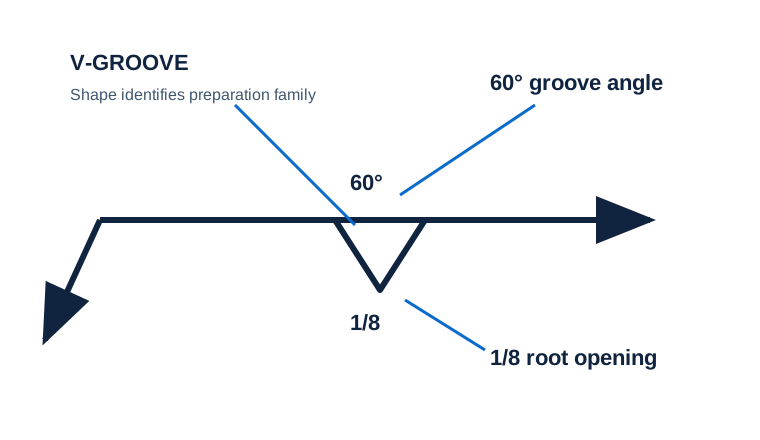 Groove Welds Overview
 Backing
 Contour & Finish
 V Groove
Educational practice only. Verify production work against the governing drawing, applicable standard, WPS, and qualified instruction.