Backgouging Requirement
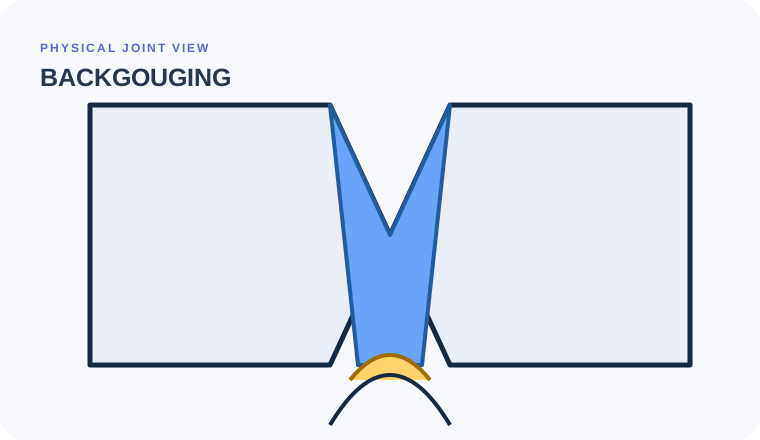
A backgouging requirement directs removal of weld and base metal from the reverse side to sound material before welding that side.
- Recognize backgouging as material removal rather than welding
- Identify the required endpoint and inspection hold point
- Separate the gouging operation from the second-side weld
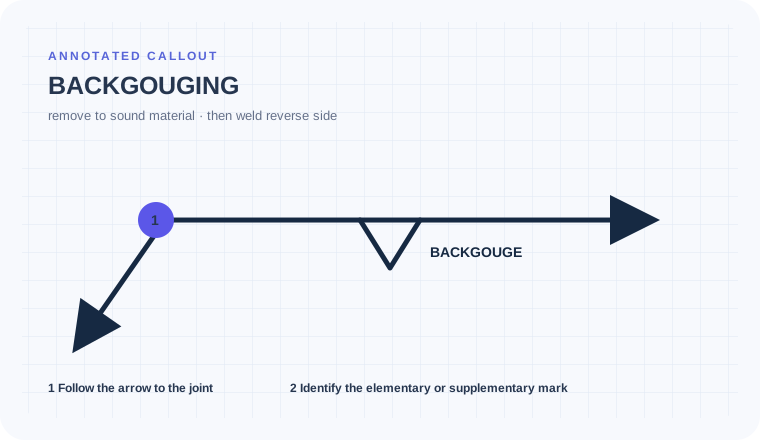
Treating backgouging as a weld
Backgouging controls the condition of the reverse-side groove before welding. Too little can leave unsound root material; too much can reduce section thickness, distort the joint, or create an unqualified groove profile.
A first-side groove weld must be opened from the reverse side
The procedure calls for carbon-arc gouging to sound metal, followed by cleaning and visual inspection before the second-side weld.
Confirm the first weld and reverse-side access, remove material using the permitted method until the specified sound condition and profile are reached, then clean and hold for inspection.
Second-side welding begins only after the groove profile and remaining section are accepted, rather than burying an uncontrolled root condition.
Stop at sound material—and stop again for acceptance.
After the first-side weld, the reverse side is opened using the permitted removal method. Welding cannot resume until groove condition and remaining section are accepted.
Treat backgouging as material removal, not deposited weld metal.
Use sound condition and specified profile as the endpoint—not an arbitrary depth.
Document cleaning, remaining thickness, and acceptance before releasing the second side.
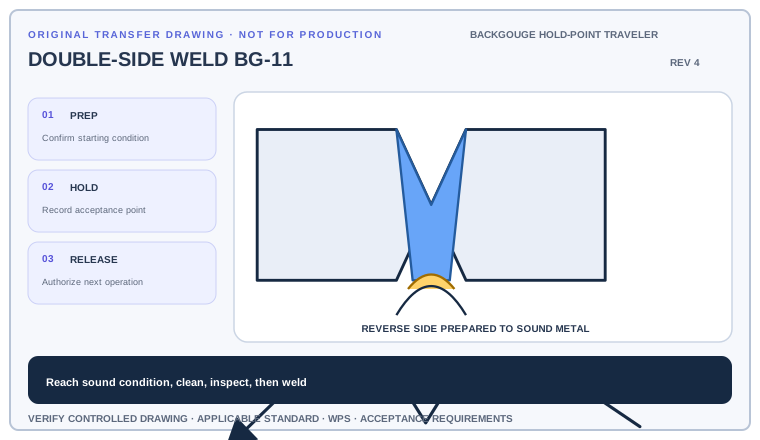
Build the traveler from first-side weld through removal, cleaning, profile check, remaining-thickness check, inspection hold point, and second-side welding.
Deliverable · A hold-point traveler that prevents second-side welding from burying an unaccepted rootCompare with the field read +
Remove weld and base metal from the reverse side by the permitted method until the specified sound condition and profile are reached. Clean and inspect the preparation, confirm remaining section, then release the second-side weld under the WPS.
Place the hold point before the second-side weld
Identify the first weld side, reverse-side access, and the referenced backgouging instruction. The symbol or tail identifies the operation; groove depth, method, profile, and acceptance need the detail, note, or WPS.
- Identify the first weld side, reverse-side access, and the referenced backgouging instruction.
- The symbol or tail identifies the operation; groove depth, method, profile, and acceptance need the detail, note, or WPS.
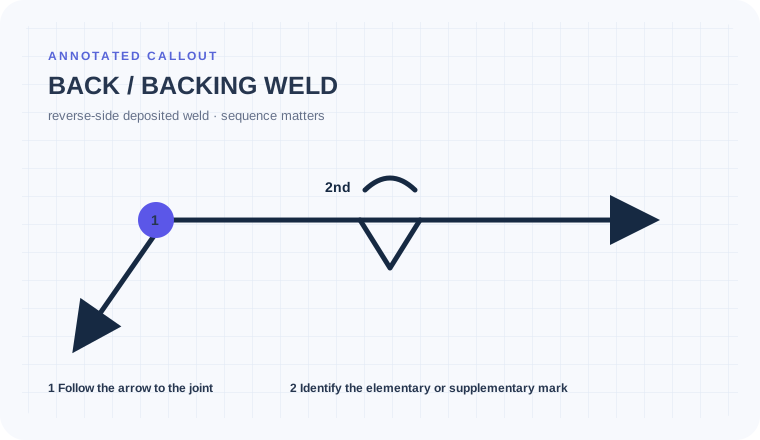
- Backgouging removes material to prepare a sound root; a back weld deposits weld metal after preparation.
- Verify access, permitted removal method, depth and profile, cleaning, inspection hold points, remaining thickness, and procedure.
Gouging shortcuts that damage or bury the root
Treating backgouging as a weld
Backgouging is a material-removal and preparation operation. The following weld is a separate step.
Gouging to an assumed depth
The objective is the specified sound condition and profile—not an arbitrary dimension or complete removal of the first weld.
Skipping the hold point
Cleaning, groove profile, remaining thickness, inspection, and permitted removal method may need acceptance before second-side welding.
Backgouging removes; a back weld deposits
Backgouging
Removes material from the reverse side
Evidence to useWhat sound condition and profile end the operation?Back weld
Deposits weld metal on the reverse side
Evidence to useHas preparation already been accepted?Backing
Supports the root during welding
Evidence to useIs a support element specified rather than removal?Read the removal requirement and its endpoint
Begin with the cue in the first column. The final column records the drawing, detail, procedure, or acceptance question that this callout cannot answer by itself.
| Visual cue | What it establishes | What still needs verification |
|---|---|---|
| Primary weld and reverse-side access | Establish where and when removal occurs | Confirm part orientation, sequence, and accessibility. |
| Backgouging instruction | Remove weld/base metal to the specified sound condition | Check permitted method, depth/profile limits, and remaining thickness. |
| Cleaning and inspection note | Defines the hold point before welding continues | Remove slag/carbon contamination and meet acceptance criteria. |
| Second-side weld | Separate deposition operation after preparation | Read size, contour, process, and WPS requirements independently. |
Has the prepared reverse side been accepted for welding?
Use the full list before fabrication, fit-up, or inspection. This is a drawing-reading handoff—not a substitute for the governing acceptance standard.
- 01Confirm sequence and reverse-side access
- 02Use the permitted removal method
- 03Reach the specified sound condition and profile
- 04Clean and complete the inspection hold point
- 05Verify remaining thickness and second-side WPS
Evidence and limits for this Backgouging lesson
This guide teaches common AWS-style drawing interpretation. It is educational material, not a substitute for the purchased standard, project specification, code, WPS, or qualified engineering direction.
How this page was made. The training diagrams, worked example, comparisons, and questions are original educational material. Read the editorial and technical review policy for the full process.
Save your place after Backgouging.
This marker records reading progress only; it does not mean the topic is mastered. Use the six-question practice page to check your understanding.
Build outward from Backgouging
 Back / Backing Weld
 Groove Welds Overview
 Melt Through
Educational practice only. Verify production work against the governing drawing, applicable standard, WPS, and qualified instruction.