Spacer in a Groove Joint
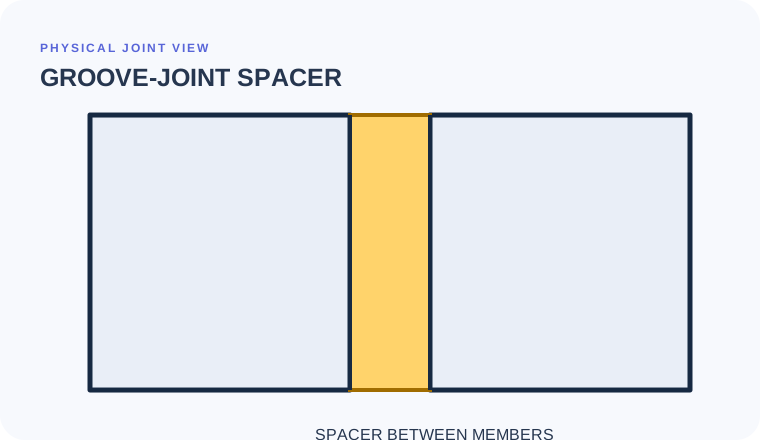
A spacer is a separate element placed between members to establish or maintain the required groove-root separation.
- Distinguish a physical spacer from root opening
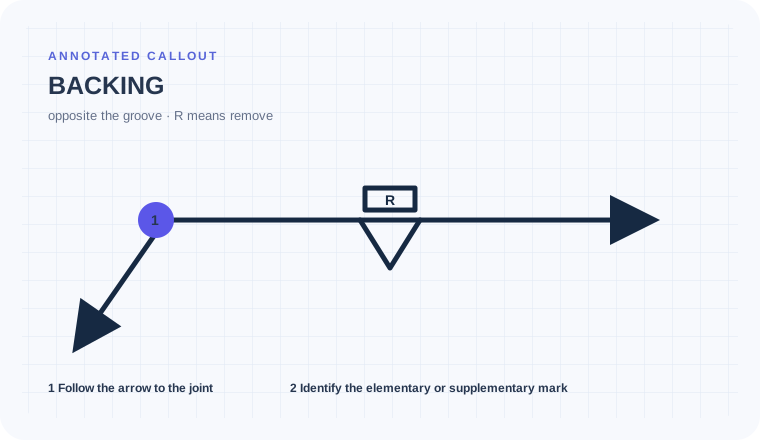
- Separate spacer position from backing position
- Identify material, fit, fusion, and final-condition questions
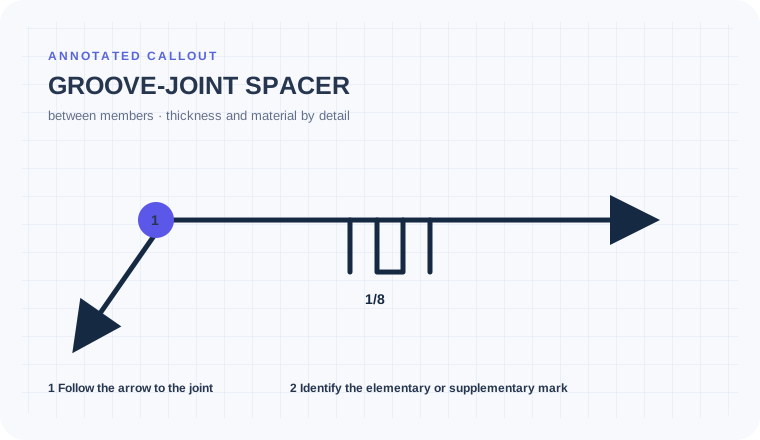
Reading a spacer as open root
A spacer changes the physical joint between the members. Mistaking it for an empty gap or moving it behind the root alters fit-up, weld volume, fusion conditions, and the qualified joint configuration.
Spacer between, backing behind, root opening empty
Spacer
Physical element between members
Evidence to useCan you point to it in the joint gap?Root opening
Empty separation between roots
Evidence to useIs there material occupying the space?Backing
Support located behind the root
Evidence to useIs the element outside rather than between the members?A square-groove joint uses a 1/8 spacer strip
The section detail shows a strip between the plate edges, while a note identifies spacer material and whether it remains in the weld.
Confirm the strip is between the members, read its thickness independently from the root opening, and verify material, length, seating, and fusion requirements.
The fit-up crew installs the intended spacer instead of leaving an uncontrolled open root or substituting backing behind the joint.
Distinguish a physical spacer from empty root opening.
A groove joint shows a controlled element between the members. The fit-up team must know its thickness, material, fusion or removal status, and effect on the final joint.
Confirm that material occupies the space between members.
Do not move the element behind the root and call it backing.
Use the detail and procedure to settle material, retention, fusion, and removal.
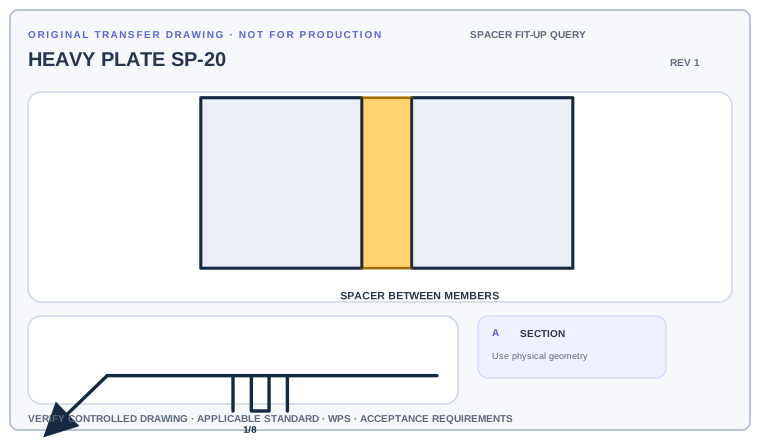
Label the spacer, the root opening around it, and the two parent members. Prepare a fit-up query for every spacer property not resolved by the symbol.
Deliverable · A spacer-specific fit-up query rather than an assumed open-root dimensionCompare with the field read +
The joint contains a physical spacer between the members; it is neither empty root opening nor backing behind the root. Its material, dimensions, and final disposition require controlled supporting information.
Identify the physical element between the members
Begin with the cue in the first column. The final column records the drawing, detail, procedure, or acceptance question that this callout cannot answer by itself.
| Visual cue | What it establishes | What still needs verification |
|---|---|---|
| Element between member roots | Physical spacer used to establish or maintain separation | Confirm material, thickness, length, and seating. |
| Root-opening dimension | Separation geometry specified for the joint | Determine whether the value includes or surrounds the spacer configuration. |
| Backing behind the root | Different support element located outside the joint gap | Do not relocate the spacer to the backing position. |
| Detail, note, and WPS | Define fusion, remain/remove, sequencing, and acceptance | Treat substitution as a procedure/design question, not a shop shortcut. |
Describe spacer, opening, and backing as different conditions
Inspect the joint detail to distinguish a spacer from an ordinary open root and from backing beneath the joint. Spacer thickness and material require dimensions or notes; the generic mark alone does not define them.
- Inspect the joint detail to distinguish a spacer from an ordinary open root and from backing beneath the joint.
- Spacer thickness and material require dimensions or notes; the generic mark alone does not define them.
- A spacer sits between joint members to control separation; backing sits behind the root to support weld metal.
- Verify spacer material, thickness, fit, whether it remains, fusion requirements, joint sequence, and WPS.
Fit-up substitutions caused by one rectangular mark
Reading a spacer as open root
A root opening is empty separation; a spacer is a physical element placed between the joint members.
Moving it behind the joint
A spacer sits between members to establish separation. Backing sits behind the root to support molten weld metal.
Assuming it stays or disappears
The symbol alone does not settle material compatibility, fusion, removal, or final acceptance. Read the detail and procedure.
Has the spacer material and final disposition been resolved?
Use the full list before fabrication, fit-up, or inspection. This is a drawing-reading handoff—not a substitute for the governing acceptance standard.
- 01Inspect the section/detail
- 02Locate the spacer between members
- 03Read material, thickness, and length
- 04Confirm fit, fusion, and remain/remove condition
- 05Verify the qualified joint configuration and sequence
Evidence and limits for this Spacer lesson
This guide teaches common AWS-style drawing interpretation. It is educational material, not a substitute for the purchased standard, project specification, code, WPS, or qualified engineering direction.
How this page was made. The training diagrams, worked example, comparisons, and questions are original educational material. Read the editorial and technical review policy for the full process.
Save your place after Spacer.
This marker records reading progress only; it does not mean the topic is mastered. Use the six-question practice page to check your understanding.
Build outward from Spacer
 Backing
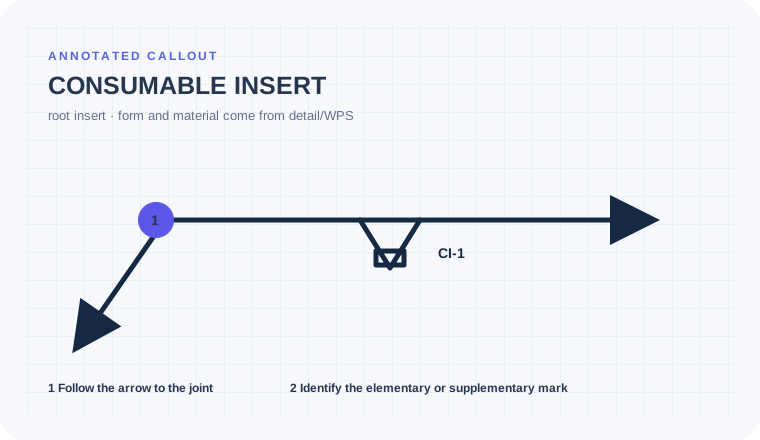 Consumable Insert
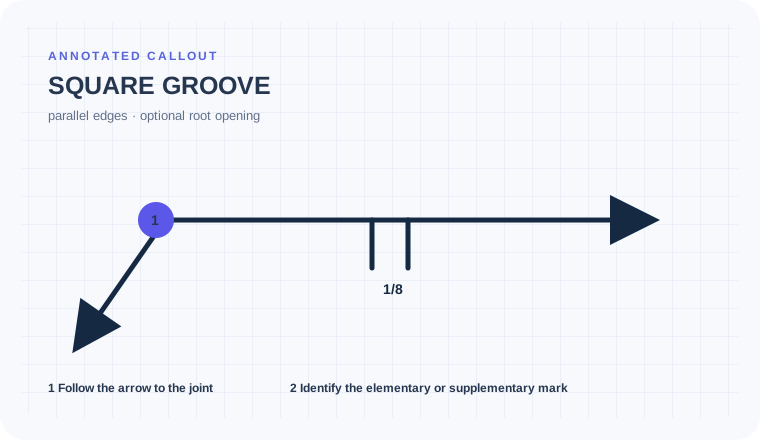 Square Groove
Educational practice only. Verify production work against the governing drawing, applicable standard, WPS, and qualified instruction.